Thursday, January 17, 2013

Amputation Instruments


     There’s a story the Director of our museum (George) likes to tell about overhearing two people on the street debating over whether or not to visit the museum.  The wife was looking in the front window and commenting that she’d like to take the tour.  Her husband replied, “Civil War medicine?  It’s just a saw!”  At that point, George stepped up and offered to show them the museum, as well as how much more there was to Civil War medicine than an amputation saw.


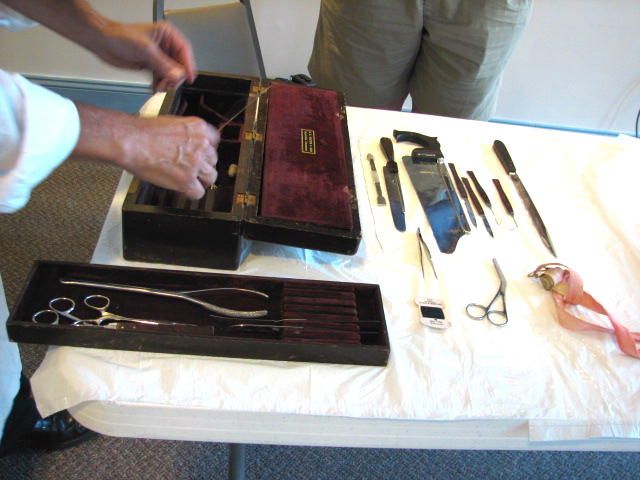
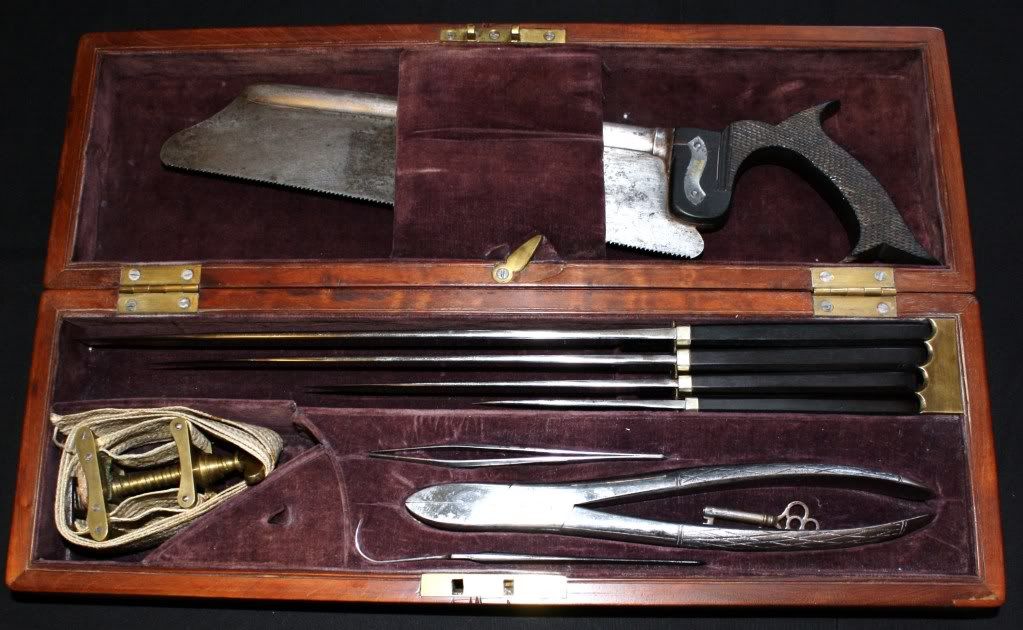
Here is what most people associate with Civil War medicine - an amputation kit. This is a nice example of an amputation kit with a rosewood case and the basic instruments (including the saw!) needed to perform an amputation.  


       Sadly, this has been the image of Civil War medicine for quite some time.  Even during the war, the surgeons were judged to be “butchers” for performing so many amputations.  The image has persisted through the years, and many people still have the idea that Civil War surgeons were heartless and incompetent.  The simple truth is that these surgeons were saving lives in the best way that the knowledge and technology of the time allowed.

     There is no doubt that amputations were a big part of Civil War medicine though. So, let’s take a look at some of the instruments that were used.
 
 
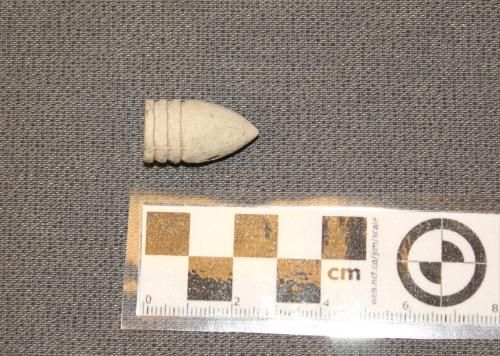
This is the culprit responsible for the necessity of so many amputations - the MiniĆ© ball. These bullets caused tremendous damage to soft tissue and to bones. One medical textbook of the time describes the damage as
“….truly terrible; bones are ground almost to powder, muscles, ligaments, and tendons torn away, and parts otherwise so mutilated, that loss of life, certainly of limb, is almost an inevitable consequence.”
 

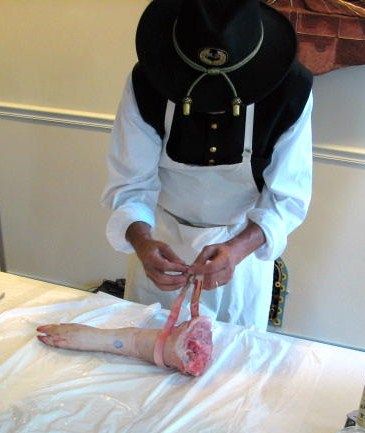
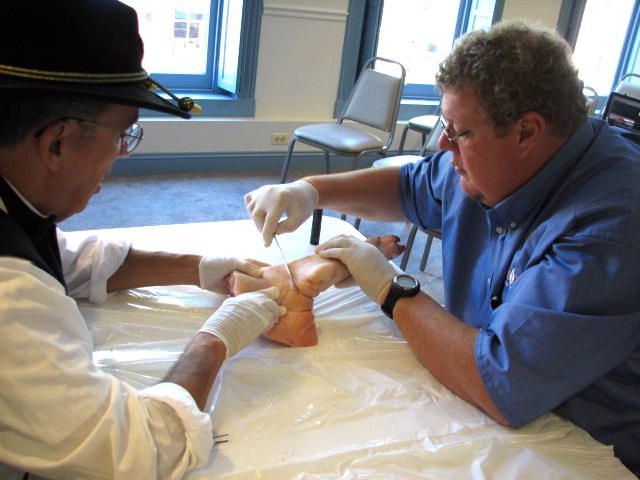
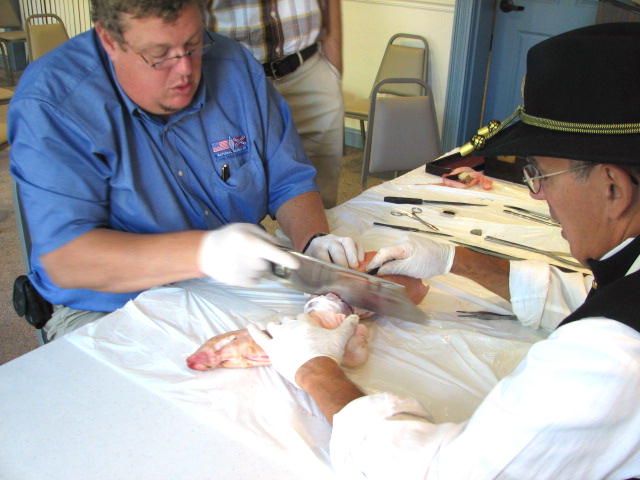
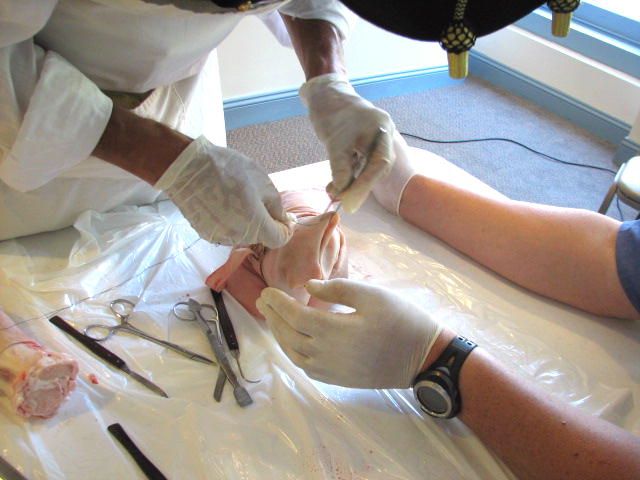
One of our volunteers is a present-day surgeon, even though he dresses as a Civil War surgeon at the museum! He took our Director, George, through the amputation process, using a pig leg. 
Don’t worry; even though those instruments look old, they are actually reproductions of Civil War instruments. I wouldn’t let them use the real ones! 


Normally the first step in an amputation was to anesthetize the patient, but obviously that was unnecessary for this“patient.” The next step would be to apply a tourniquet to the limb above the wound, to stop or slow the bleeding.


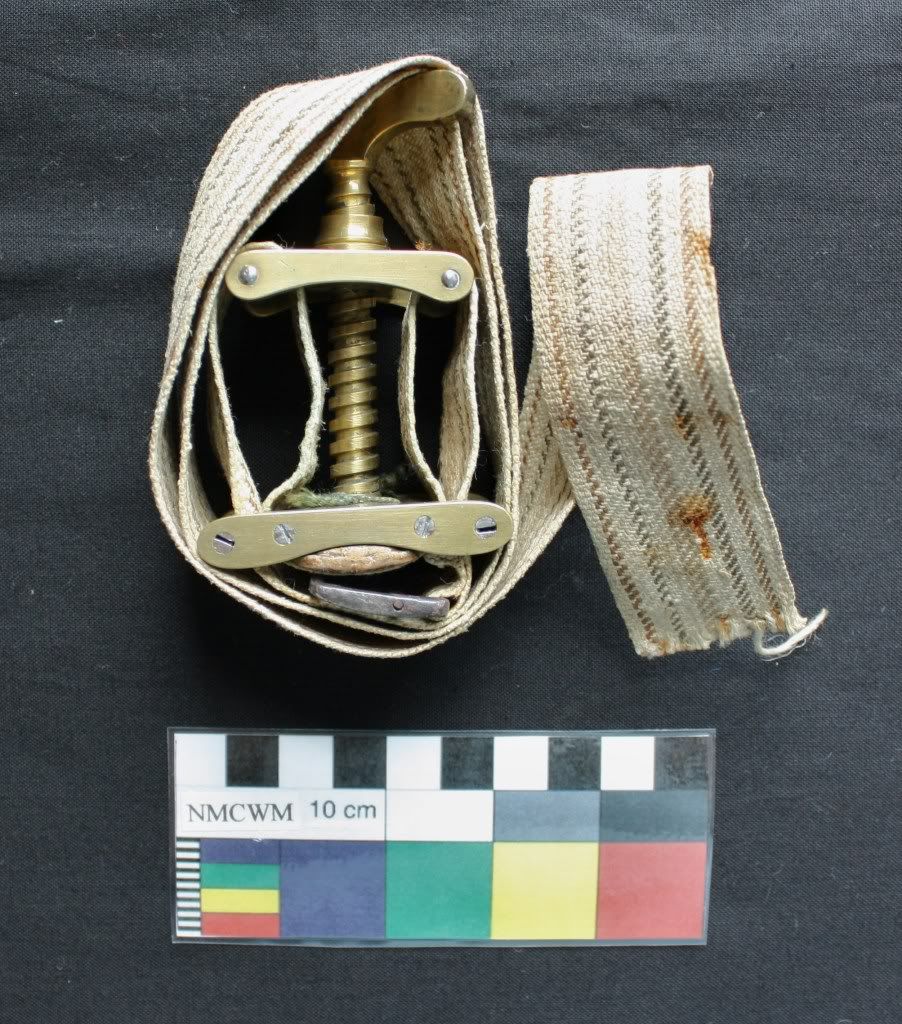
Here is an example of a Petit’s screw tourniquet, which would have been used in the Civil War.


     There were two main methods of amputation used in the Civil War.  The flap method left flaps of skin and muscle which would be used to cover the stump at the completion of the operation.  A V-shaped cut would be made, and then the bone would cut away a few inches above the flaps.  In a circular amputation, the surgeon basically cut in a circle around the limb, would draw back the skin slightly and then cut straight across the bone. 

 
George uses an amputation knife to make the first incision through the skin and muscle. Afterwards, the skin and muscle will be pulled back slightly from the bone. 
 I will point out here that Civil War surgeons did not wear gloves.

 
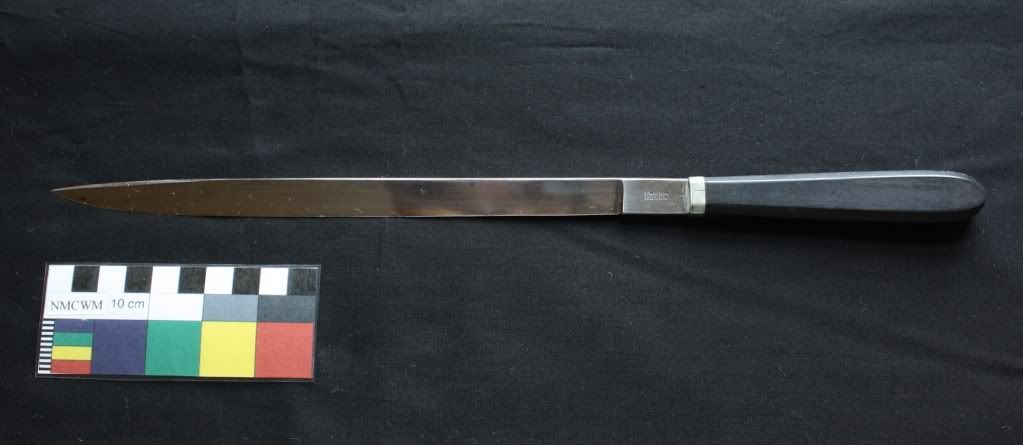
This amputation knife is similar to the one being used in the photo above. Single-edged amputation knives were used for circular amputations.

 
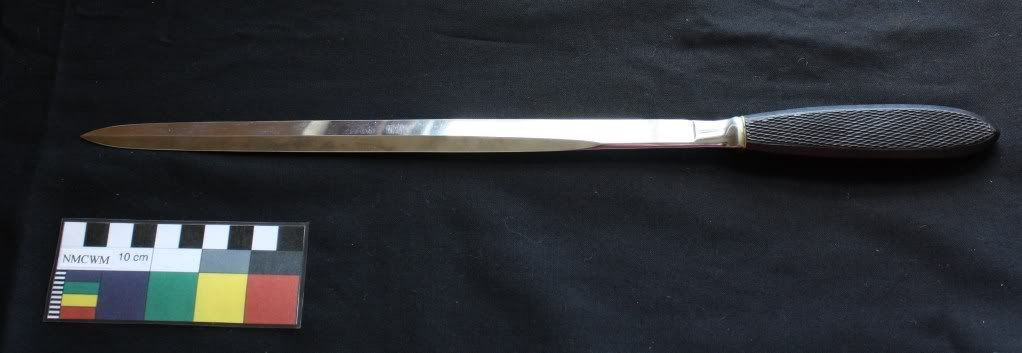
This double-edged amputation knife is called a catlin. It was more commonly used in flap amputations.


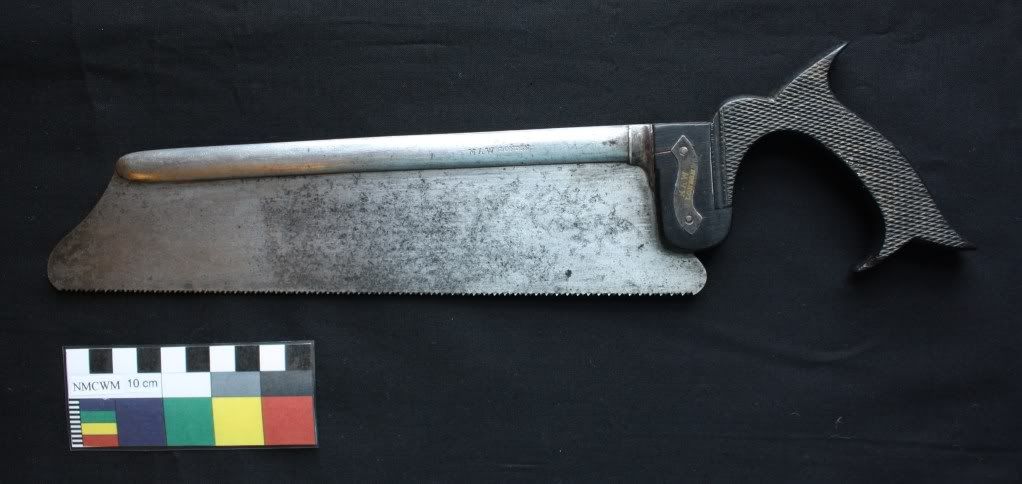
The amputation saw was used just to cut through the bone.


This is a typical amputation saw with a “fishtail” handle. The checkered texture on the handle gave the user a better grip. Operating quickly was important. There was less chance of shock to the patient, and it allowed the surgeon to move on to the next patient quickly. Most amputations were done in less than ten minutes!


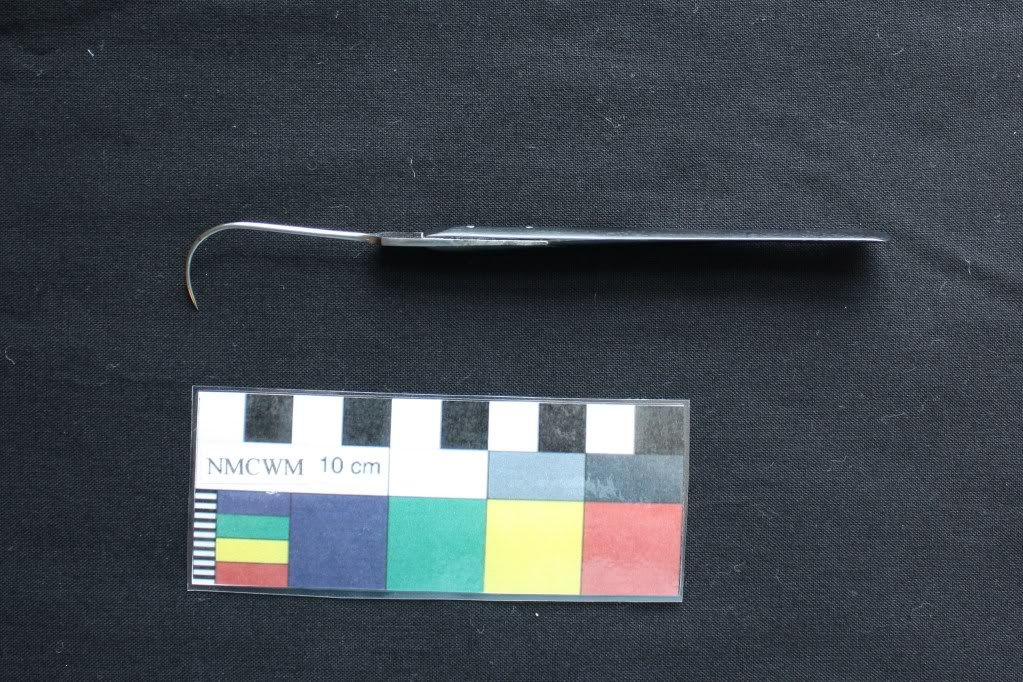
With the amputation completed, the surgeon would use a hooked instrument called a tenaculum to pull out the large blood vessels to be tied off.


Here is a closer view of a tenaculum.


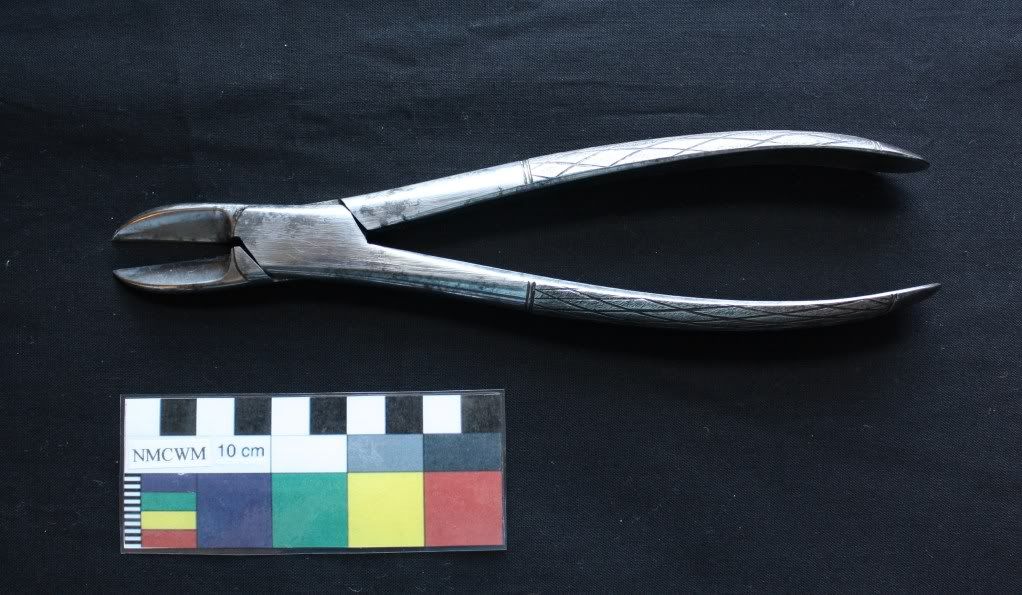
This instrument, called a rongeur, would be used to remove any sharp edges from the bone before closing the wound. A bone file could be used to help smooth the bone too.


And finally, the flaps of skin would be sutured together. Often, an opening would be left to allow the wound to drain. Bandages would be applied to the stump.


Surgical needles haven’t changed much since the Civil War!

 
     To learn more about Civil War amputations click here.
      
     I’ll leave you with a quote from the medical director of the Army of the Potomac, Dr. Jonathan Letterman, who wrote in his report after the battle of Antietam,
“The surgery of these battle-fields has been pronounced butchery. Gross misrepresentations of the conduct of medical officers have been made and scattered broadcast over the country, causing deep and heart-rending anxiety to those who had friends or relatives in the army, who might at any moment require the services of a surgeon.
 It is not to be supposed that there were no incompetent surgeons in the army. It is certainly true that there were; but these sweeping denunciations against a class of men who will favorably compare with the military surgeons of any country, because of the incompetency and short-comings of a few, are wrong, and do injustice to a body of men who have labored faithfully and well.”


Photos courtesy of the National Museum of Civil War Medicine.

Thursday, January 10, 2013

Sprucing Up a Museum


     Once a year, usually at the beginning of January, my museum closes for several days to allow for a thorough cleaning of the museum, as well as the completion of some projects which are best done when the building is clear of visitors.  Though many of the jobs are not very glamorous, they are necessary to keep the museum in shape for visitors and for the staff.  It is at least a good excuse for dressing down for work! 

     Let’s take a look at some of what was done last week.

 
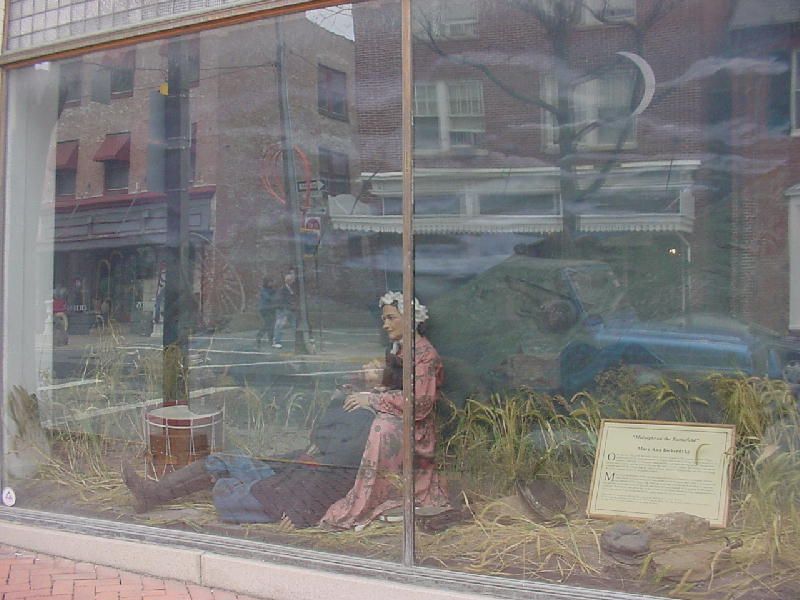
One of the big projects facing us is changing our front window display. It has had the same scene depicting Mary Ann “Mother” Bickerdyke tending to a wounded soldier on the battlefield for over 10 years. This scene was inspired by the illustration “Midnight on the Battle Field” by J.J. Cade which is captioned, “It was Mother Bickerdyke, with a lantern still groping among the dead. Stooping down and turning their cold faces towards her, she scrutinized them searchingly, uneasy lest some might be left to die uncared for. She could not rest while she thought any were overlooked who were yet living.”


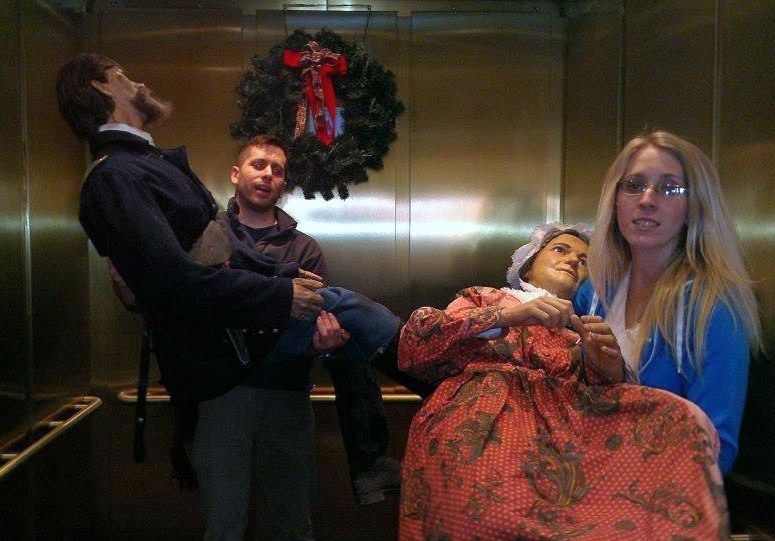
Before we can construct a new display, the old one has to be taken out. I wonder if Tom or Katie ever thought that carrying mannequins would be part of their job descriptions?


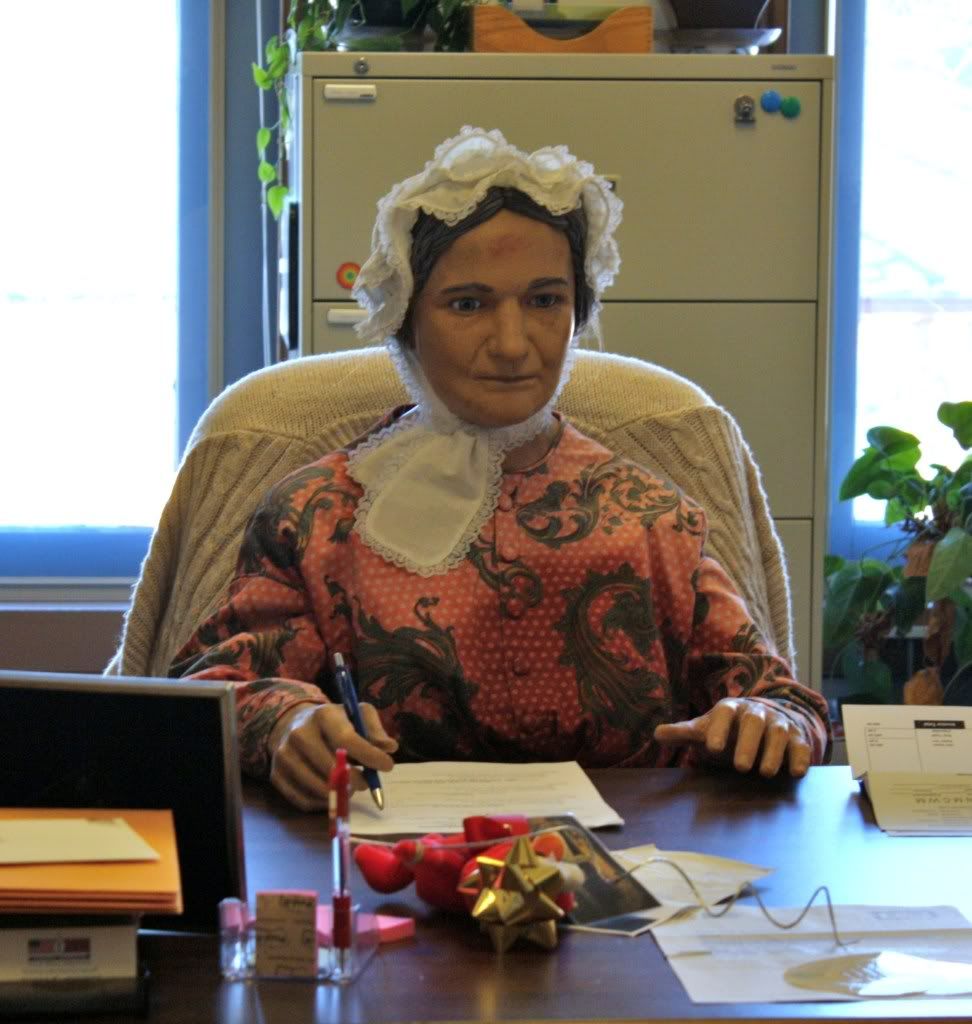
There’s always time to have a little fun on the job - I just hope I don’t see my next paycheck signed by Mother Bickerdyke!


     As with most big projects, there was an unwelcome surprise though.  When the mannequins were inspected more closely, it was discovered that there were insects and insect damage on the clothes.  It was a full “Red Alert” moment for me!  The clothes were immediately taken off and sealed in plastic bags, samples of the insects were sealed in smaller plastic bags, the mannequins were thoroughly vacuumed, and the exterminator was called.  Fortunately, the insects were contained to the display window; no evidence of them was found in any of the galleries or the collection room.


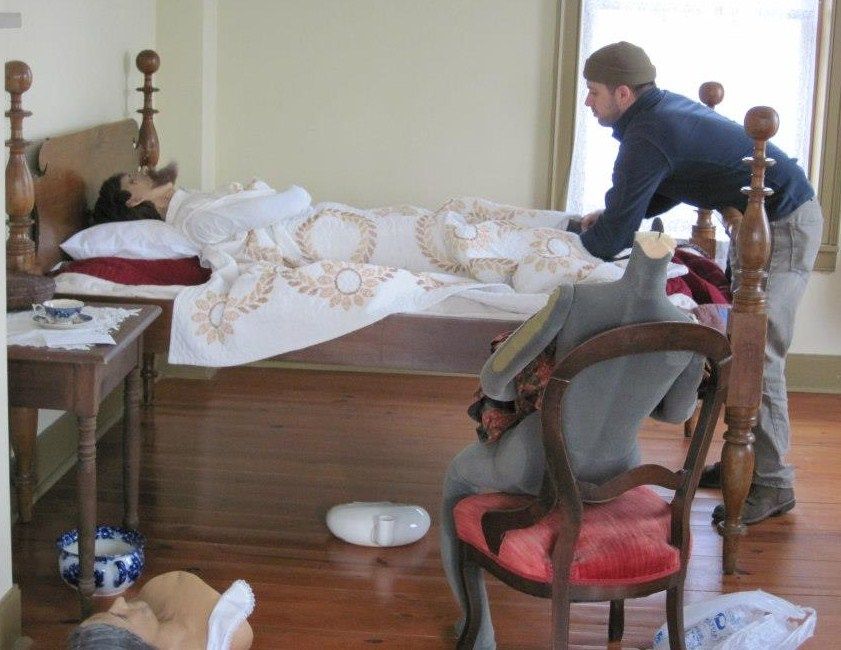
Once the mannequins had been treated, they were re-dressed and used out at the Pry House. Mother Bickerdyke is now Mrs. Richardson, and the wounded soldier has gotten a promotion to become a wounded General Richardson.
  

     We’re still working on the new front window display.  You’ll have to check back for reports on our progress!

     My biggest project was the installation of two new displays.  You can see the new Clara Barton exhibit in last week’s post.  I also switched our Civil War Sesquicentennial display in the front lobby from the Battle of Antietam to the Battle of Gettysburg.


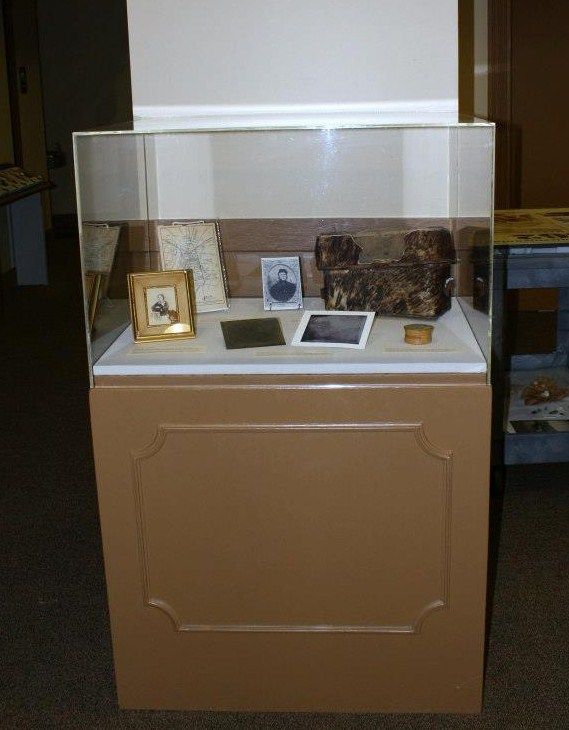
The new Gettysburg display contains a glass plate negative and photograph of a wounded color bearer, a medical case identified to a hospital steward, a tooth powder container, a portrait of a nurse, and a map of Gettysburg which shows the field hospitals.


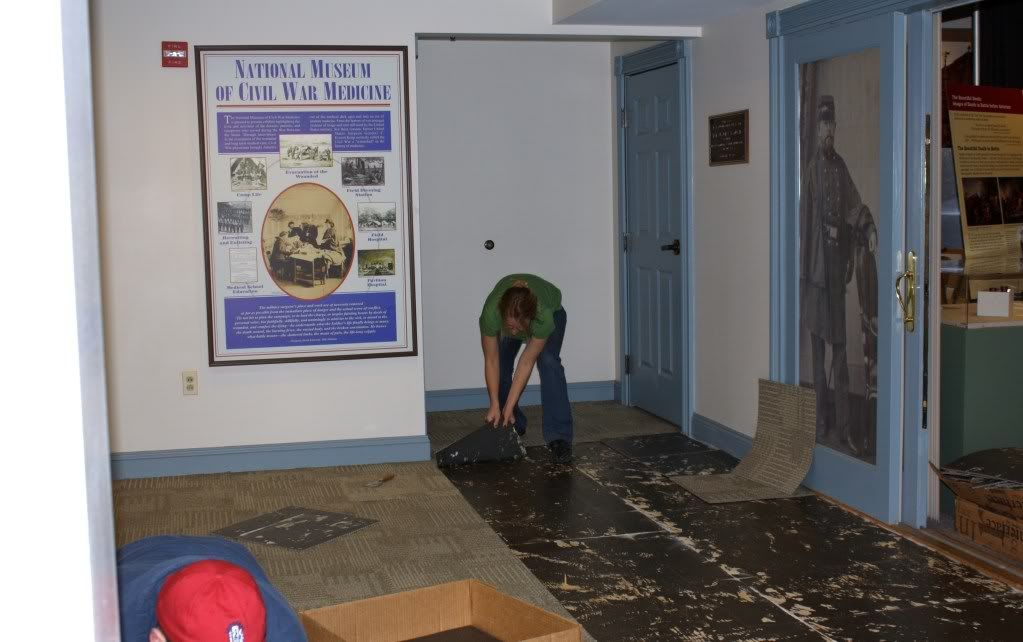
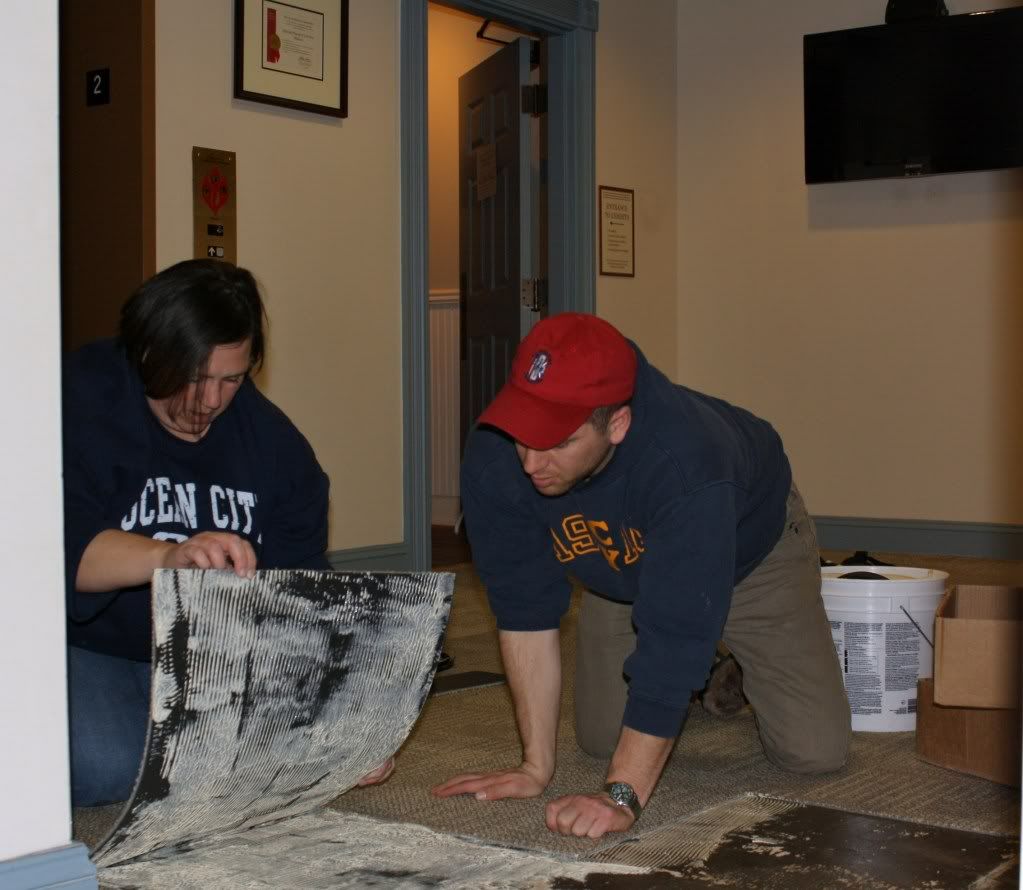
     Another museum project was to replace the carpet in our second floor lobby.  As you can see in the following photos, it was not a fun job!
 

Katie pulled out the old carpet squares.
 

April and Tom installed the new squares.


     There were plenty of other “dirty jobs” too.


Karen collected all the recycling.


The museum store needed to be cleaned and reorganized.


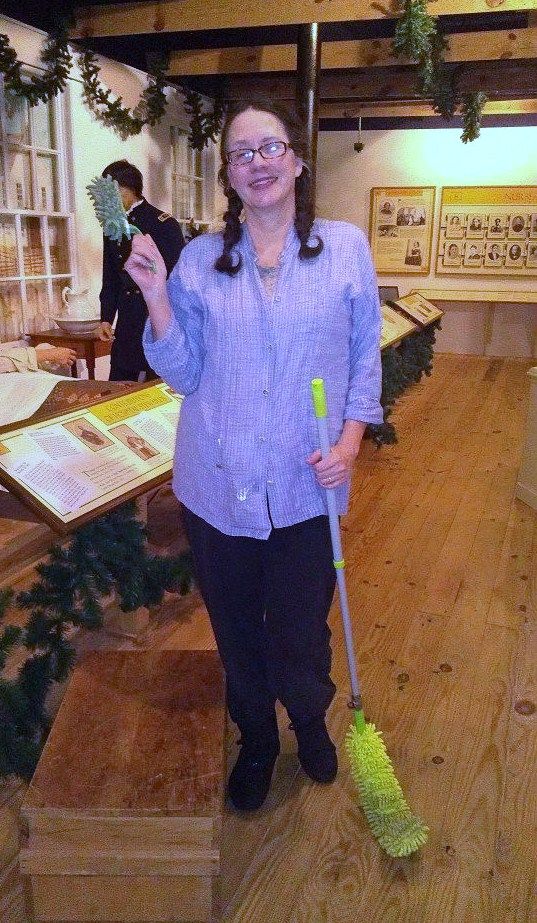
Adele tackled the job of dusting the galleries.


Kyle mopped the stairwell.


Audrey cleaned the carpet in our conference room.


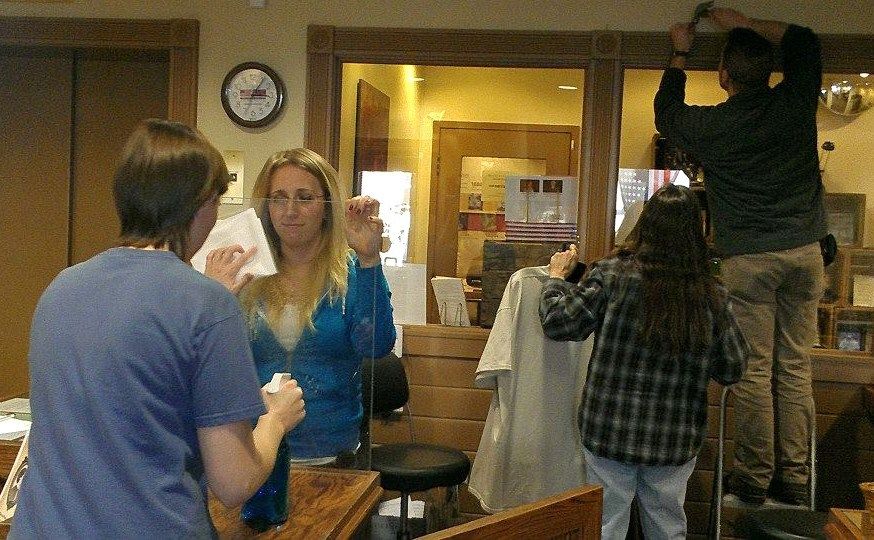
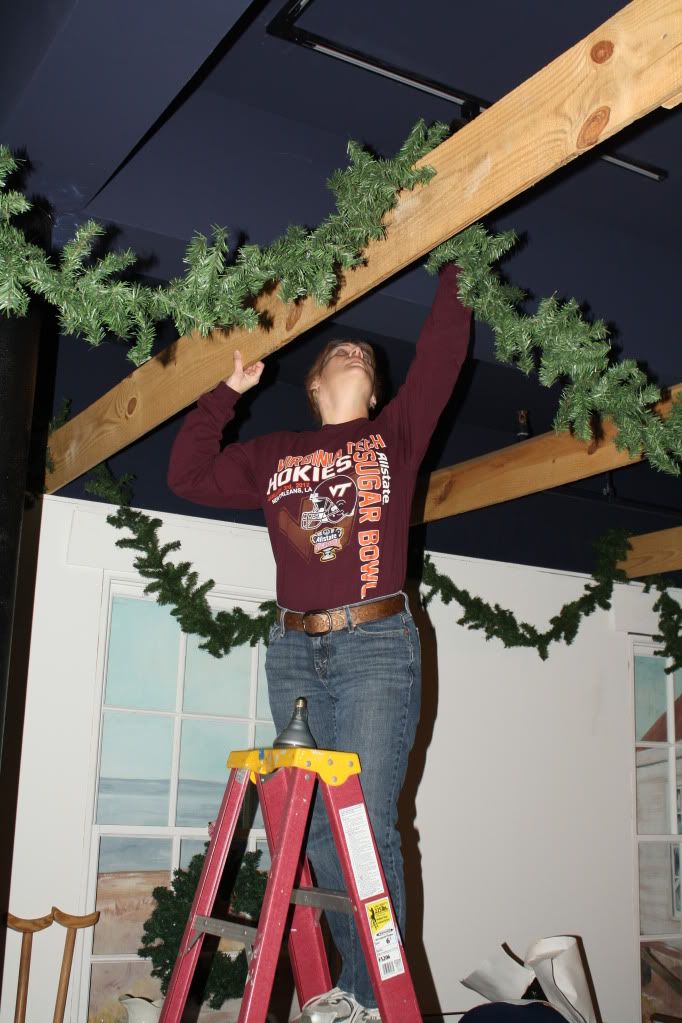
And of course, there are always light bulbs that need to be replaced!
 

     It takes a lot of hard work on the part of the museum staff and volunteers, but the results are worth it.  The museum is ready to handle another year of visitors! 
    

 Photos courtesy of the National Museum of Civil War Medicine.

Thursday, January 3, 2013

Clara Barton’s Missing Soldiers Office Exhibit


     It’s been a while since I updated the progress on the Clara Barton’s Missing Soldiers Office.  You may recall from my previous posts that the National Museum of Civil War Medicine recently partnered with the U.S. General Services Administration to create this new museum in the space where the Missing Soldiers Office was once housed.  The artifacts discovered in this building, which are owned by the GSA, are associated with Clara Barton and Edward Shaw, her landlord and friend.  A number of these artifacts will be displayed at the new museum on 7th Street in Washington, D.C.
     Restoration work on the space started in 2012.  A welcome center will be opened on the first floor of the building, and the third floor, where Clara lived and worked, will be devoted to the interpretive exhibits.  It is projected to be open by the end of this year.

     In the meantime, some of the artifacts have been borrowed from the GSA so that we could create a display of some of Clara Barton’s items here at the NMCWM.  It has taken quite a bit of work, but I was finally able to install the new exhibit this week.  I’m sure all you Clara Barton fans are eager to take a look!
 
 
Of course the old exhibit had to be taken out first! Alison was a big help in moving the artifacts.


The case is kind of bare now, but it won’t stay that way for long!


First the panels have to be put on the walls. If a panel falls or a nail drops, I don’t want any of the artifacts involved! Here, Kyle helps me to mark where the panels will be placed.


Got it on the first try!


The labels for the artifacts are added last.


     Now let’s take a closer look at some of the artifacts on display.


Most mid-nineteenth century medicines were shipped and stored in glass bottles such as these. The bottle on the left retains a partial paper label which reads, "Antimon... John... Corner of E... Wash..." It contained antimony, a toxic element that was used as an emetic (to cause vomiting) during the Civil War.


This salt bag is representative of the supplies that Clara Barton collected and took to the soldiers at the front. Salt was used to season and preserve food. 


Here are just a few of the socks and sock tops which were found in the building. If the bottom of a sock was worn out or damaged, the top could be removed and a new bottom knitted to it. Refurbished socks could be sent to soldiers in need, and the soldiers were often in need of socks! Note the blood stains on the sock in front.


Two of the metal signs which Clara Barton used at the Missing Soldiers Office.
 
 
And here is the finished display. 
I can't help but hope that Clara would be pleased with it!
 
 
     More information about the Clara Barton Missing Soldiers Office Museum can be found at http://www.civilwarmed.org/clara-bartons-missing-soldiers-office-museum/about-clara-bartons-missing-soldiers-office/


Photos courtesy of the National Museum of Civil War Medicine.

Thursday, December 20, 2012

Portrait of a Civil War Surgeon


     Part of my job here at the National Museum of Civil War Medicine involves helping to tell the stories of the men and women who were involved with medical care in the Civil War.  Sometimes that is accomplished using their personal belongings or their medical instruments and supplies.  These things can certainly give insight into aspects of their lives or the medical techniques and technology of the time, but it’s not quite the same as being able to see the face associated with the objects.  I think it is far more compelling to be able to show that these were real people in the stories that we tell.  So, today I thought I would share the story and the image of one Civil War Surgeon. 
 
 
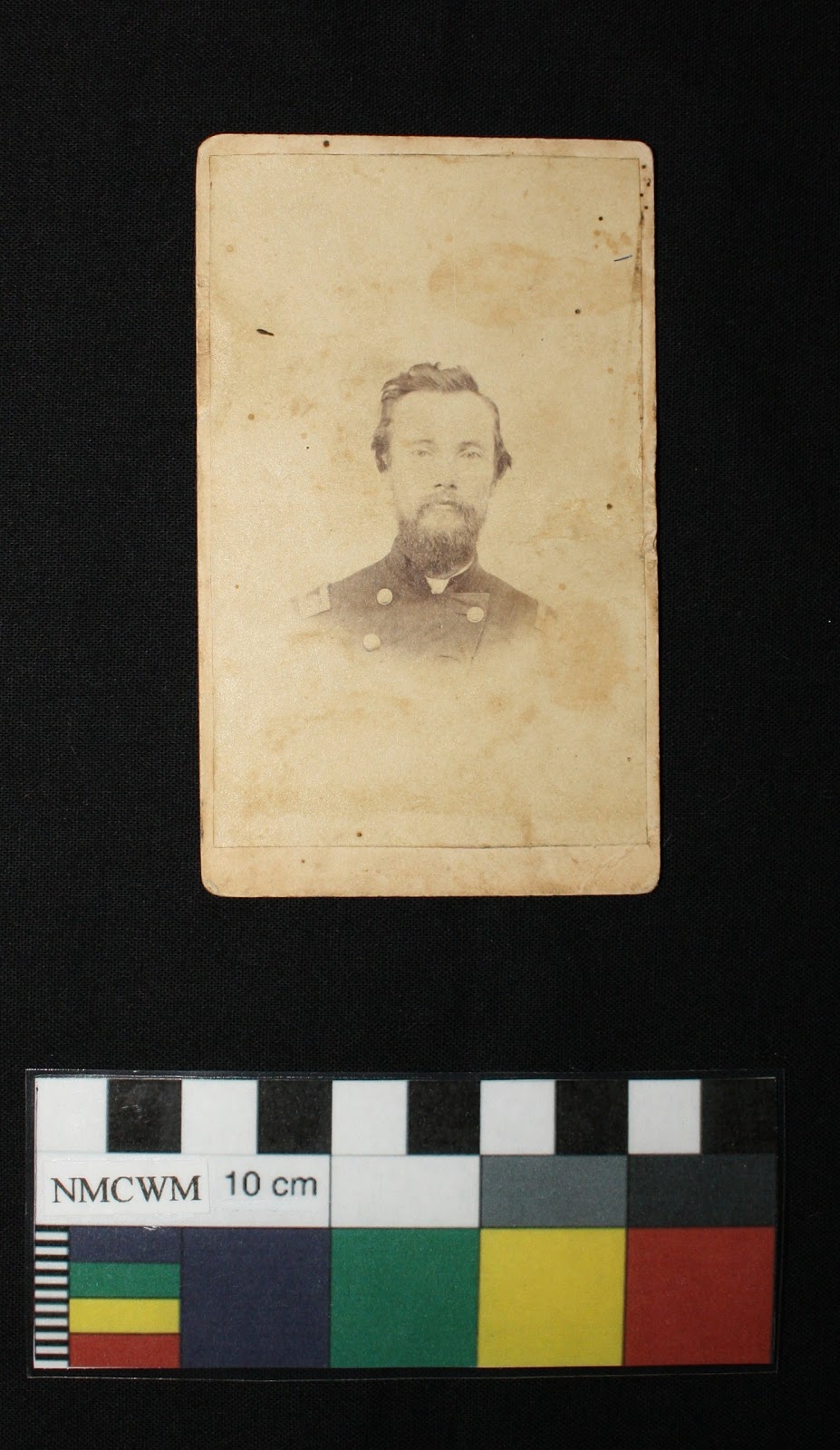
Here is a carte de visite, or CDV, of Surgeon Orange B. Ormsby in uniform, which was probably taken in 1863 or 1864. A CDV is a type of small photograph, usually an albumen print mounted onto a thicker paper, which was patented by French photographer AndrĆ© Adolphe EugĆØne DisdĆ©ri in 1854. They were inexpensive and easy to mass produce, so they were quite popular during the Civil War. Soldiers had them made to send home to their families or sweethearts, and those back on the home front had them made to send to the soldiers.  
 

     At the start of the Civil War, Orange B. Ormsby was a young physician in Greenville, Illinois.  On June 25, 1861, at the age of 25, he enlisted as a Private in the 22nd IL Infantry, Company E.  His enlistment papers describe him as being 5’ 10” tall, with blue eyes, light hair, and a fair complexion.  In August of that same year he transferred to the 18th IL Infantry, Company S and was commissioned as an Assistant Surgeon.  His claim to fame was that during the Siege of Corinth, he was working behind Confederate lines and assisted in saving the life of General Richard Oglesby, who was wounded in the chest and back.  After the war General Oglesby went on to serve three terms as the Governor of Illinois, and also served as a U.S. Senator.  The town of Oglesby, IL, is named for him. 
 
 
An image of General Richard Oglesby from the National Archives and Records Administration.
 
 
     By 1863, Orange B. Ormsby had enlisted as a Surgeon in the 45th IL Infantry, Company S, also known as the “Washburn Lead Mine Regiment.”  The 45th IL was assigned to the Army of the Tennessee, and during his time with them Ormsby would have been in battles in Mississippi, including the Vicksburg Campaign.  In fact, there are monuments to the 45th IL Infantry in Vicksburg. 

     On October 29, 1864, Ormsby was discharged for disability (lumbago and rheumatism) and went home to his wife and family in Illinois.  He received an Army pension starting when he was age 55 and died on June 13, 1899 at the age of 63.  Another interesting note is that his youngest son, Oscar Burton Ormsby, followed in his father’s footsteps by attending medical school and serving in the medical corps in World War I.
 
 
Here you can see the back of the CDV. It is marked on the back “Surgeon, O.B. Ormsby 45th ILL” in pencil. In the middle of the back is printed “A. Braisted, Photographer, Freeport, IL.” It is signed in ink at the bottom “Yours Truly, O.B. Ormsby, Surg. 45thIll. Infy.”
 

     Surgeon Ormsby’s CDV was donated to the NMCWM by one of his descendants.  He shared the story with me of searching for Ormsby’s grave:  I visited Murphysboro, Illinois in 2004 and found his grave.  An invisible string led me to it as I had no prior indication where it was but was led (by accident?) directly to it.  I went to the cemetery which was quite large and stopped at a random site, got out of the car to survey the area and found I was inadvertently located next to his plot.  The hair on the back of my neck was standing at attention!  Perhaps Orange’s spirit was helping me.  I don’t know but it makes a good story. 

     Though the CDV image is somewhat faded, we still wanted to display it.  In this case, the best option was to digitize it.  The digitized image and a brief biography of Orange B. Ormsby are currently a part of the NMCWM’s video display, “Faces of Civil War Medicine.”  This way Surgeon Ormsby’s image and his story can be shared with the public, while the original CDV image can be better preserved for the future.  I hope Orange’s story can be preserved this way as well! 


Photos courtesy of the National Museum of Civil War Medicine, except where otherwise noted.
 
*Note – I will be taking a short break for the Christmas holiday, but I look forward to sharing more blog posts with you in 2013.  Happy Holidays everyone!
Thursday, December 13, 2012

Changes at the Pry House


     This is normally the time of year when I would be arranging to bring the artifacts back from the Pry House Field Hospital Museum for the winter.  However, this year it was decided to keep the Pry House open during the winter, at least on weekends.  Other than ensuring that the heat is not turned down as it usually is when the facility is closed, no changes need to be made for the artifacts or exhibits.  Some of the displays have been changed though, and this week I took a few additional artifacts out for a new exhibit.

     Since this is the first winter the Pry House will be open, we chose an exhibit on Winter Quarters.  There was not as much active fighting during the winter months of the Civil War, and long-term camps called winter quarters were set up for the soldiers, with heated huts or tents.
 

Library of Congress photo of Federal soldiers in winter quarters at City Point, Virginia.  


The Winter Quarters exhibit shows some of the items which would have been important to the soldiers during the cold months.  On display are blankets, pipes, tobacco, matches, various games, and a photo of a surgeon in full cold weather uniform.
 

     Cold was not the only enemy during winter, the boredom of camp life had to be combated as well.  Soldiers played all sorts of games, or competed in various contests.  And, just as children (and some adults) do today, they had snowball fights when there was snow!  Private John Casler of the 33rd Virginia Infantry wrote of his experiences in the book, Four Years in the Stonewall Brigade, and described one snowball fight, "Officers would be captured and pulled off their horses and washed in the snow, but all took it in good part.  After the fight was over we went out with a flag of truce and exchanged prisoners….. It was probably the greatest snowball battle ever fought, and showed that “men are but children of larger growth.”” 

For a longer account of this battle click here.
 
 
Allen C. Redwood's illustration of a snowball fight from Casler's book.


A handmade wooden checker/chess board is on display, along with some gutta percha chess pieces. 


If game pieces were not available, the soldiers would improvise.  This is a lead bullet which has been carved into a chess bishop.
 
 
This was also originally a bullet, and could have been used as a checker player or a poker chip.


     The winter exhibit is not the only change though.  Tom and Kyle have also been busy decorating the Pry House for Christmas. 
 
The Operating Theater, which depicted a surgeon treating the wounded General Hooker, is looking less gruesome and more festive now! 


The mannequins which were in the Operating Theater were moved to the Richardson Room. They are now being used to depict a doctor caring for General Richardson.
 

     If you get the chance, come out and see the decorations and new displays.  If you can visit on Dec. 15th, you might even get the opportunity to see a Civil War Santa Claus! 


Photos courtesy of the National Museum of Civil War Medicine.

Thursday, December 6, 2012

Abraham Lincoln


     On Monday, the staff of the NMCWM was fortunate to be allowed the afternoon off to view the movie Lincoln.  It was a field trip of sorts! 
 
Here is the staff in front of the theater. A big thank you goes out to George, Tom, and Katie for staying behind to keep the museum open while the rest of us saw the movie!
 

     I’d heard a lot of good reviews about the movie, so I was eager to finally see it.  Though I thought there were a couple of instances that showed a definite Hollywood interpretation, I did enjoy it overall.  There were even some short scenes that touched on Civil War medicine, which justified our trip!  I think my biggest disappointment was the fact that the severed leg of General Sickles in its display case was shown briefly in one scene, but was not identified.  What a great opportunity they missed in not mentioning that story!

     Since there is so much interest in Abraham Lincoln at the moment, I thought I’d share a few of the Lincoln artifacts in the museum’s collection that are not currently on display.


Here is a Certificate of Commission for Dr. Elias J. Marsh, which bears the signature of President Abraham Lincoln, and is dated August 10, 1861.


     A letter in our collection that was written by Civil War nurse, Clarissa Jones, on April 15th, 1865 about Lincoln’s assassination reads:  “I am unfit to write or even think.  I am utterly prostrated in mind by the awful news of last evening—I am just starting out to try to get a paper to send to you with this, fearing I may not succeed I will mention the terrible calamity of which the paper gives a better def.

     The Pres. was last night shot while in the Theatre and died this A.M. at 7.  Sec. Seward was stabbed while in bed, and his son mortally stabbed by the same man—he has since died—reports to the effect that Grant also was assassinated….but it has not been confirmed—“  It shows the shock and grief many people felt at the news of his assassination, as well as some of the rumors which circulated.
 
 
One of our more interesting Lincoln items is a replica of a plaster life mask made by Leonard Volk in 1860.
 

     A life mask is made by applying plaster to a person’s face and letting it dry.  Petroleum jelly or oil is put on the subject’s face first, but there can still be some hair pulled out when the mask is removed.  Mr. Lincoln is said to have commented that the process of removing the hardened plaster cast from his face was, “anything but agreeable!”  He was reportedly pleased with the final product though.  He had another life mask done about five years later, and it is interesting to compare the two masks.  The presidency and the war appear to have aged him much more than five years.  You can see a short video about the two life masks here. 
 
 
Here is a cast of Lincoln’s hand which was done at the same time. The object he is clutching is a broom handle, and the hand next to the cast gives some perspective for the size of his hands!
 

     Though these casts are interesting to study, I think I’d prefer to simply have a picture taken!

  
Photos courtesy of the National Museum of Civil War Medicine.