Showing posts with label cleaning. Show all posts

Thursday, December 19, 2013

An Artifact Scare!


     Most museums, mine included, have far more artifacts than they can display all at once.  So, the artifacts which are not in display are kept in the museum’s collection room.  Here they are stored in fairly stable environment conditions, which help to preserve them.  However, even under ideal conditions there can still be issues which arise.  This is why I routinely monitor the artifacts there.  So, when I recently discovered some whitish spots all over a large leather medical trunk, I was not at all pleased! 
 
This leather trunk, or pannier, was used to transport medicines and medical supplies in the Civil War.  You can see the areas of white haze on the exterior.


Things looked even worse when I checked the interior.  It looked a lot like mold!
 
     I took the pannier from the collection room to my conservation work room, partly in preparation for removing the mold, but also to protect the rest of the artifacts in the collection room from the mold.  Knowing that mold spores are airborne and had probably already spread through the collection room was not a pleasant thought for me though!  However, after doing some research I discovered that it was not mold after all, but was actually “fatty spew” or “fatty bloom.” 

     Fatty spew occurs when the fats and oils in the leather migrate to the surface.  Spew can be caused by issues during the tanning process of the leather, or from the application of leather products which contain oil or grease, or from environmental conditions, especially a drop in the temperature.  So, next I researched ways of getting rid of the spots.  I found a number of suggestions, but ultimately decided to try the gentlest and least-invasive method first – wiping the surface with a clean, damp sponge.
 
Here’s the pannier after it was cleaned.  You can see the embossed “U.S. Medical Dept.” on the front.  The top is embossed, "Jacob Dunton Inventor / Philadelphia / Patent Applied For."  Jacob Dunton was an apothecary and inventor from Philadelphia who was granted many patents for medical items including a tourniquet, bottle stopper, pill machine, and medicine wagon.
 

The interior looks much better now! 


This pannier has been stored with an acid-free insert to help stabilize the pannier.  The lid is the biggest concern since it otherwise would have nothing underneath to support its weight.  Leather can sag over time, and this helps to prevent that.
 
     I understand from my research that the fatty spew can possibly return.  So, I will be keeping a closer watch on this pannier.  If that happens I can try some different things, but I will first see if this simple fix does the trick.
 
Back on the shelf in the collection room, where it belongs!
 

     To see three different medical panniers from the Civil War, click here.


Photos courtesy of the National Museum of Civil War Medicine.

Thursday, February 7, 2013

Volunteering at a Museum


     I’ve mentioned previously that I wear many “hats” here at the museum.  In small museums it is common for staff members to take on multiple roles.  But none of us could complete our duties without the help of our dedicated group of museum volunteers!  They donate their time and expertise to tackle a wide variety of tasks both in the galleries with the visitors, and behind the scenes at the museum.  They may not get the same public recognition as some of the staff members, but they are a vital part of the museum.  Today I thought I’d show just some of the work done by our museum volunteers.
 
Sometimes the first face a visitor sees is that of a volunteer docent.
 

Volunteers lead some of the museum tours.
 

They give lectures.


They represent the museum at outreach programs.


Some even get to portray Civil War surgeons….


…or soldiers!


Volunteers help to teach our visitors things like signaling.


Sometimes teaching involves playing games! Here some volunteers play a game of croquet in front of the Pry House.


Other times the visitors can join in the games. Here a young visitor is introduced to the game of Graces.


We are very fortunate that a Civil War Santa Claus volunteers his time at our museum each Christmas!


Volunteers also work behind the scenes doing research.


As a volunteer you never know what you will be needed do – sometimes it’s directing traffic….


… or helping to reorganize the store….


….cleaning the museum….


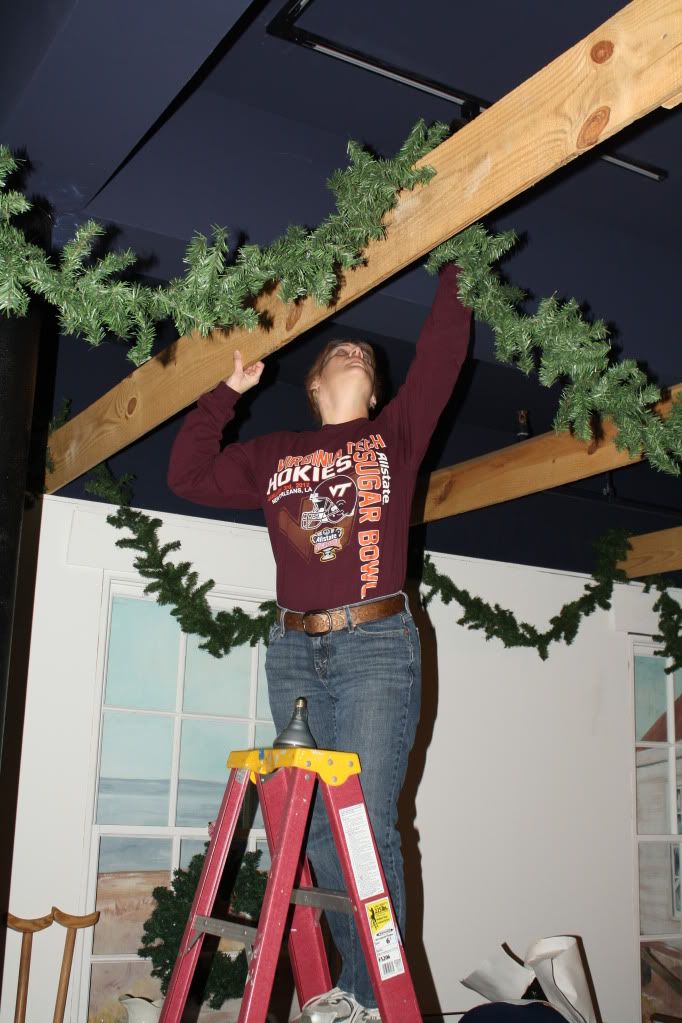
….decorating the museum….


….doing conservation work on the artifacts (if you have the proper training!)….


….or weeding the garden!


     Volunteers do all these jobs, and many more, for no pay and usually not much recognition.  The museum could not run without them though.  I am very grateful for all that they do!
 

Photos courtesy of the National Museum of Civil War Medicine.

Thursday, January 10, 2013

Sprucing Up a Museum


     Once a year, usually at the beginning of January, my museum closes for several days to allow for a thorough cleaning of the museum, as well as the completion of some projects which are best done when the building is clear of visitors.  Though many of the jobs are not very glamorous, they are necessary to keep the museum in shape for visitors and for the staff.  It is at least a good excuse for dressing down for work! 

     Let’s take a look at some of what was done last week.

 
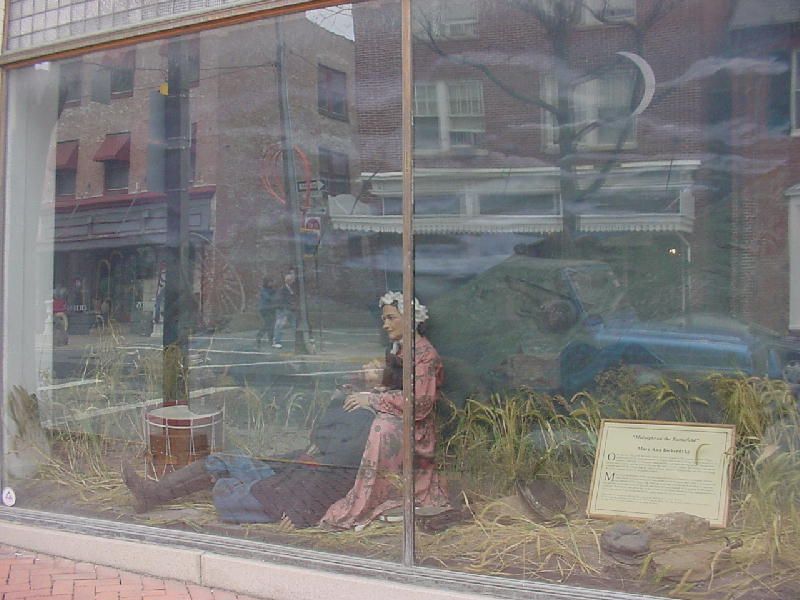
One of the big projects facing us is changing our front window display. It has had the same scene depicting Mary Ann “Mother” Bickerdyke tending to a wounded soldier on the battlefield for over 10 years. This scene was inspired by the illustration “Midnight on the Battle Field” by J.J. Cade which is captioned, “It was Mother Bickerdyke, with a lantern still groping among the dead. Stooping down and turning their cold faces towards her, she scrutinized them searchingly, uneasy lest some might be left to die uncared for. She could not rest while she thought any were overlooked who were yet living.”


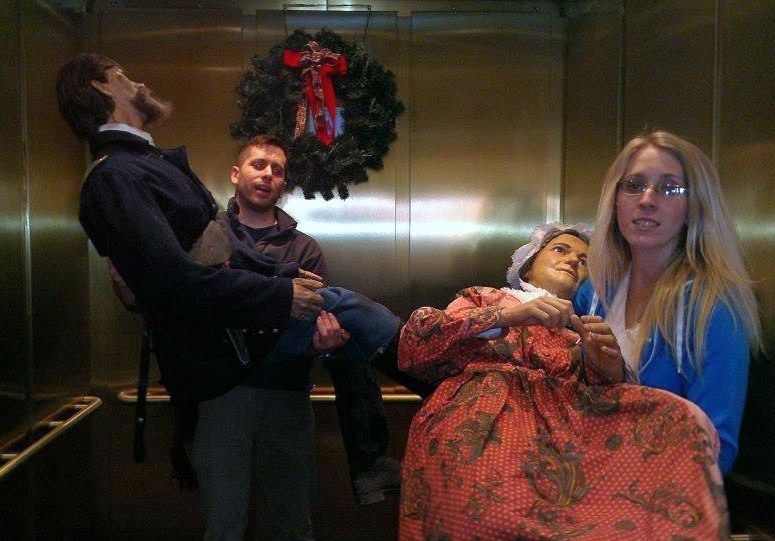
Before we can construct a new display, the old one has to be taken out. I wonder if Tom or Katie ever thought that carrying mannequins would be part of their job descriptions?


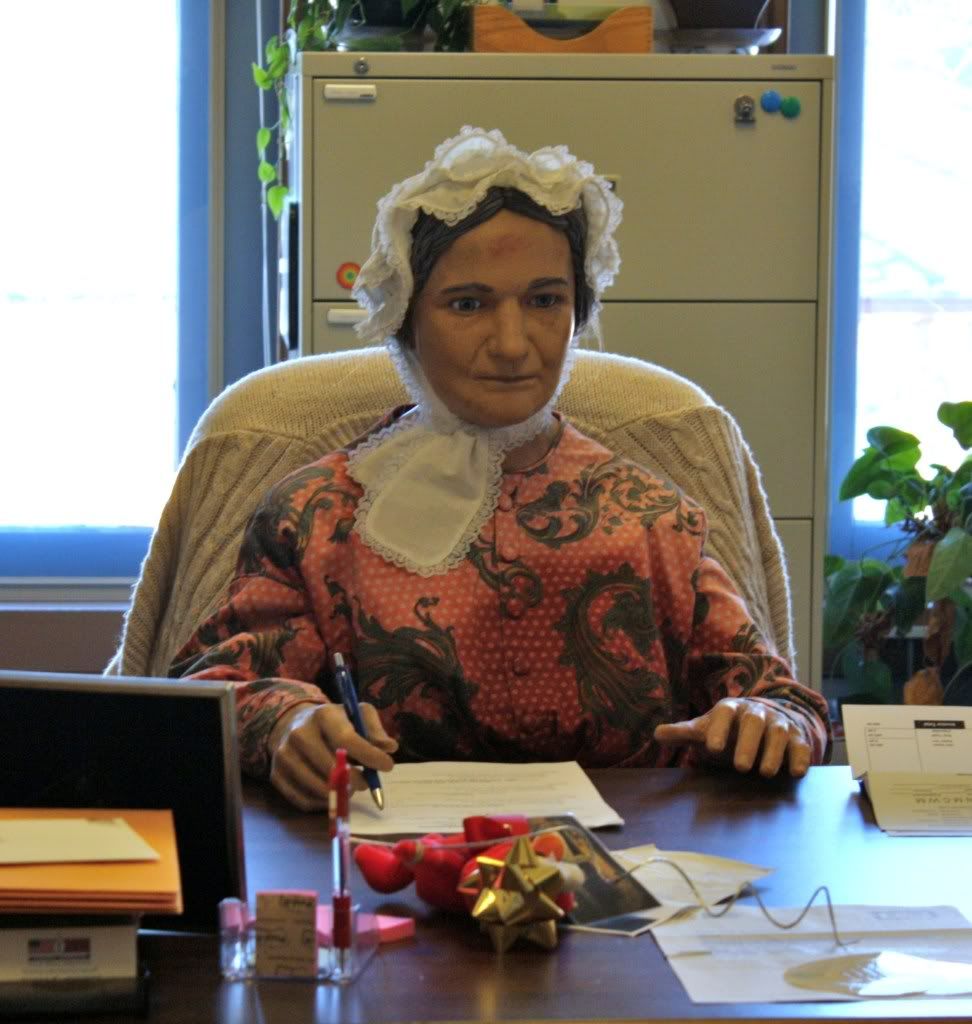
There’s always time to have a little fun on the job - I just hope I don’t see my next paycheck signed by Mother Bickerdyke!


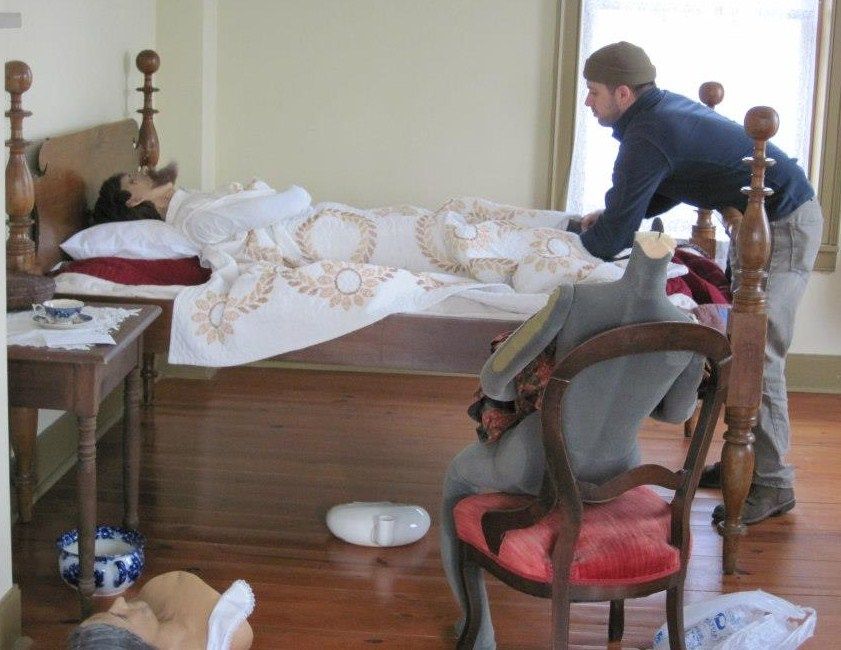
     As with most big projects, there was an unwelcome surprise though.  When the mannequins were inspected more closely, it was discovered that there were insects and insect damage on the clothes.  It was a full “Red Alert” moment for me!  The clothes were immediately taken off and sealed in plastic bags, samples of the insects were sealed in smaller plastic bags, the mannequins were thoroughly vacuumed, and the exterminator was called.  Fortunately, the insects were contained to the display window; no evidence of them was found in any of the galleries or the collection room.


Once the mannequins had been treated, they were re-dressed and used out at the Pry House. Mother Bickerdyke is now Mrs. Richardson, and the wounded soldier has gotten a promotion to become a wounded General Richardson.
  

     We’re still working on the new front window display.  You’ll have to check back for reports on our progress!

     My biggest project was the installation of two new displays.  You can see the new Clara Barton exhibit in last week’s post.  I also switched our Civil War Sesquicentennial display in the front lobby from the Battle of Antietam to the Battle of Gettysburg.


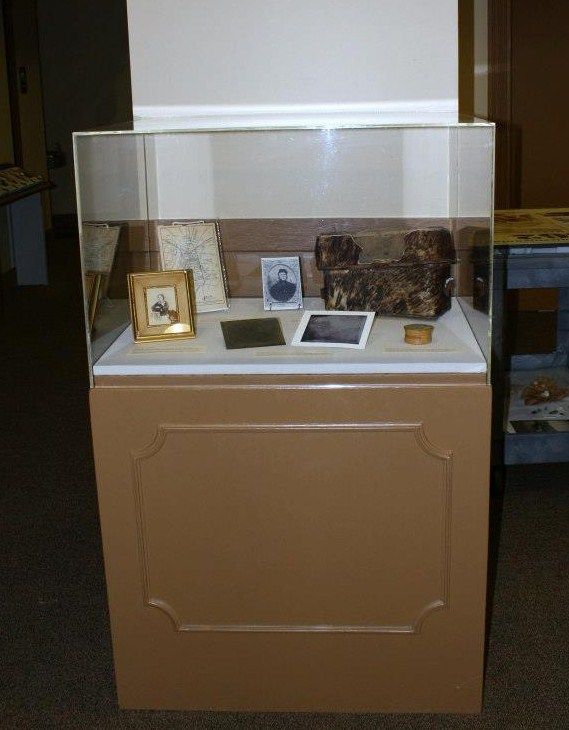
The new Gettysburg display contains a glass plate negative and photograph of a wounded color bearer, a medical case identified to a hospital steward, a tooth powder container, a portrait of a nurse, and a map of Gettysburg which shows the field hospitals.


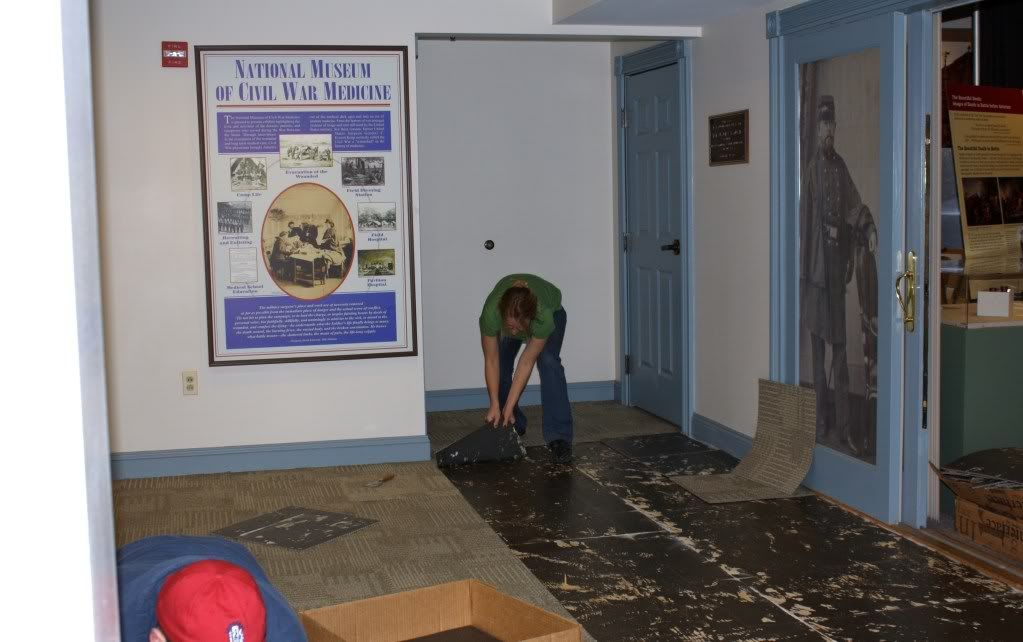
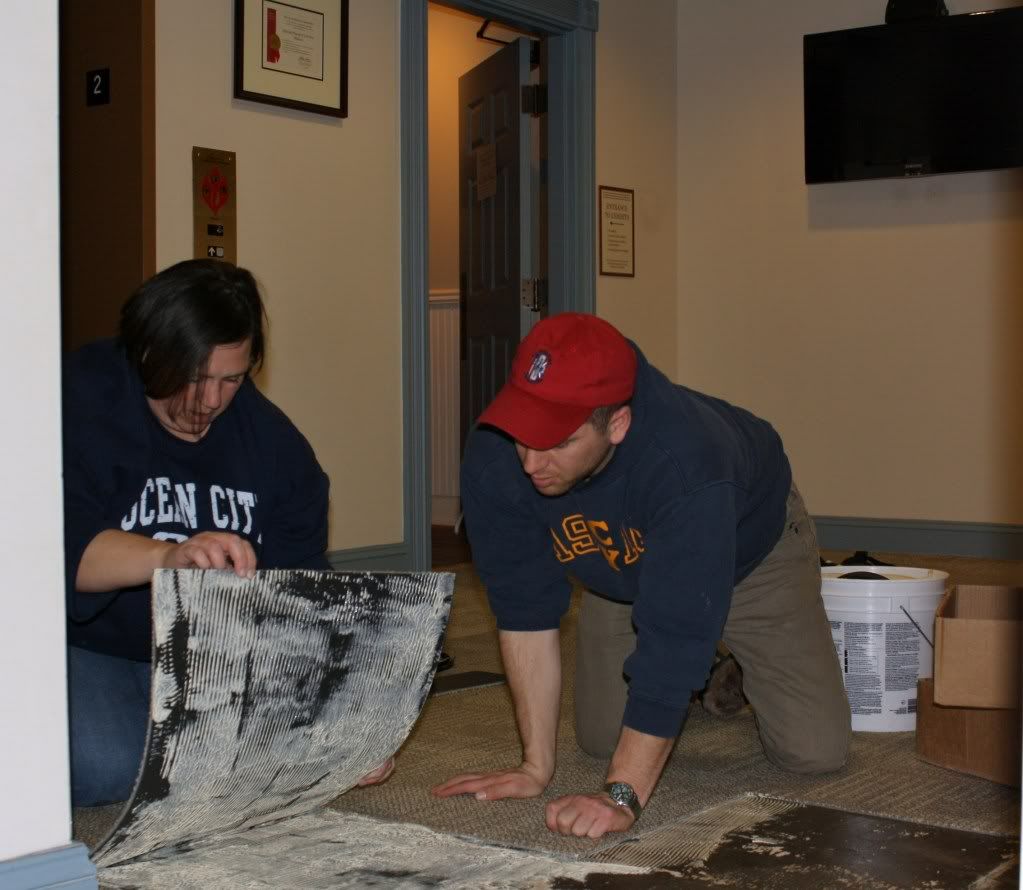
     Another museum project was to replace the carpet in our second floor lobby.  As you can see in the following photos, it was not a fun job!
 

Katie pulled out the old carpet squares.
 

April and Tom installed the new squares.


     There were plenty of other “dirty jobs” too.


Karen collected all the recycling.


The museum store needed to be cleaned and reorganized.


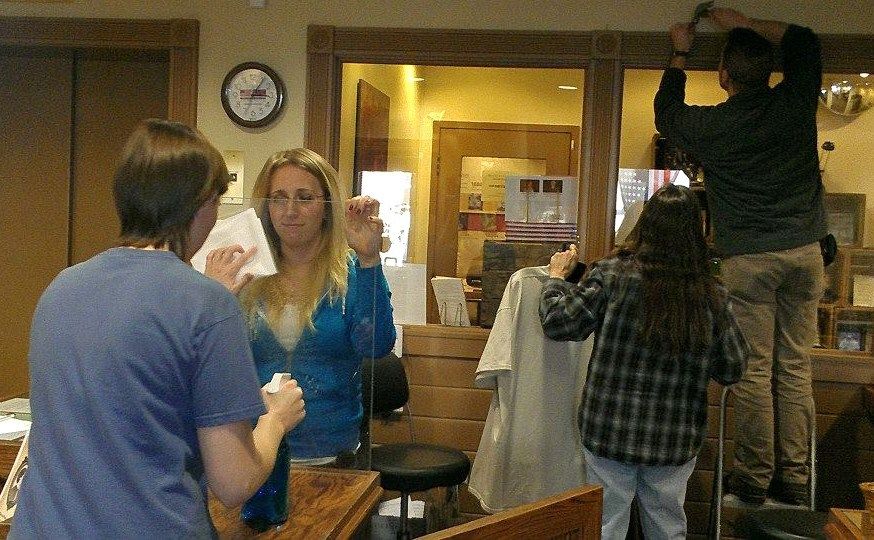
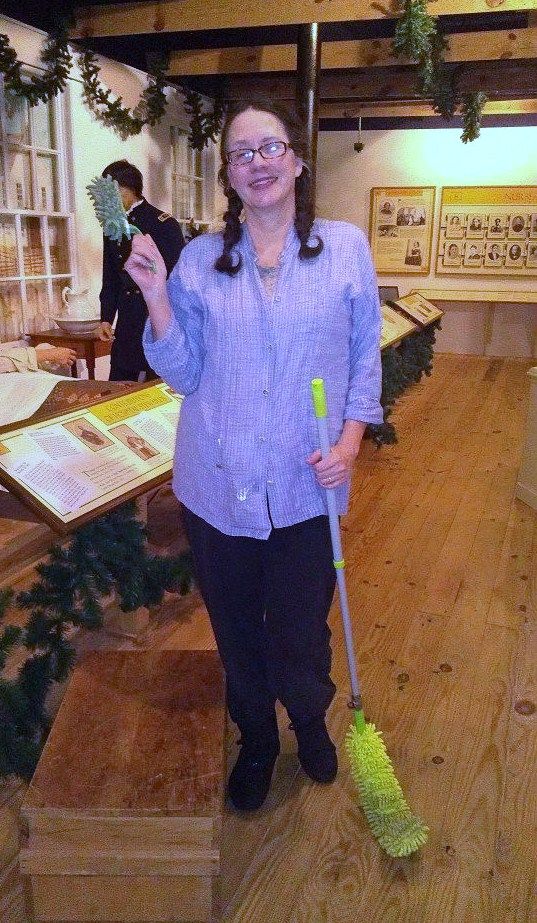
Adele tackled the job of dusting the galleries.


Kyle mopped the stairwell.


Audrey cleaned the carpet in our conference room.


And of course, there are always light bulbs that need to be replaced!
 

     It takes a lot of hard work on the part of the museum staff and volunteers, but the results are worth it.  The museum is ready to handle another year of visitors! 
    

 Photos courtesy of the National Museum of Civil War Medicine.

Thursday, March 22, 2012

Clara Barton’s Missing Soldiers Office


     The National Museum of Civil War Medicine is about to gain another satellite location, the Clara Barton’s Missing Soldiers Office, which will be located in Washington D.C.  This means I will be responsible for the artifacts at three different sites.  Overall, it’s an exciting prospect though! 

     You may recall that Clara Barton founded the American Red Cross after the Civil War.  During the Civil War she was known as the “Angel of the Battlefield” in recognition of her care of the wounded soldiers and her work in getting much-needed medical supplies to the battlefields.  In 1865, she started the Missing Soldiers Office from her room in a boarding house on 7th St. in Washington D.C., and she responded to over 63,000 letters with inquiries about missing soldiers.  By 1867 she had discovered the fates of over 22,000 men. 

This is the exterior of the building which housed Clara Barton and her Missing Soldiers Office.  You can see the windows to her rooms on the third floor. 


     By 1996, the building had been abandoned for many years, and was about to be demolished.  The building is owned by the General Services Administration, and Richard Lyons, a GSA employee, happened to check the attic of the building.  He discovered several boxes of items which belonged to Clara Barton.  The plans for demolition were cancelled, and the GSA eventually approached the NMCWM to manage Clara Barton’s Missing Soldiers Office.  The agreement was approved recently, and everyone is eager to move forward.  The Clara Barton site will not be open to the public until sometime next year though, since there is quite a bit of work still to do!


Here’s one end of the room. You can see the wood floor, the horsehair plaster on the upper portion of the wall, the wallpaper on the lower portion of the wall, and the holes for the stove pipes.

     Last Friday, several of us from the GSA and the NMCWM took time to clean up the space a little.  It has many years’ of accumulated dust and dirt and it needs some repairs, but it appears pretty much as Clara left it. 


This was her door – number 9. So, now I can say that I have touched the same doorknob as Clara Barton! None of the other doors on the hall have mail slots. She had the mail slot you see in the photo cut into the door because she was receiving so many letters inquiring about missing soldiers.

     The space will be restored by professionals.  We were just there to clean up enough for a crew from C-Span to come in and film it on Monday.


The cameraman for C-Span is up on the ladder filming the attic where the artifacts were found. NMCWM volunteer, Audrey Scanlan-Teller, holds the other ladder. The large windows face out over 7th Street. You can see how much work still needs to be done!
 
     So, although the Clara Barton artifacts are owned by GSA, I will be responsible for the care of the ones which will be on display.  We plan on displaying a few here at the NMCWM in the near future.  Of course, most of them will be displayed at the new Clara Barton’s Missing Soldiers Office.  In the meantime, I need to assess which ones are stable enough to display and which ones need conservation work done.


Here is Clara’s original tin sign for her Missing Soldiers Office, painted in black and gold. It is currently being stored inside an acid-free box padded with ethafoam and acid-free tissue paper.  There are some scratches to the paint, but otherwise the sign is in good condition.


     I’m not going to show too many of the artifacts yet; I do want people to come visit the museum when it opens!  I’m sure I’ll be giving you some sneak peeks at the work as it progresses though.
    
You can see more information about Clara Barton's Missing Soldiers Office here: http://www.civilwarmed.org/clara-barton-missing-soldiers-office/


Photos courtesy of the National Museum of Civil War Medicine.

Thursday, January 12, 2012

Cleaning Daze


     Every January the National Museum of Civil War Medicine closes for several days in order for the staff to do an in-depth cleaning, and to tackle any changes or repairs to the place.  It is a productive but exhausting process!  Today is the fourth and final cleaning day for 2012, and the place is looking great!

     My part in the process included moving artifacts and display cases out of areas which were being painted and recarpeted, then moving them back later, cleaning the insides of the glass exhibit doors in all the galleries, painting display cases, cleaning the galleries, helping to paint the museum store, installing two new displays, and replacing the pest strips in the galleries.


The base of a vitrine, or display case, which needs to be moved from its temporary storage place on the second floor, back to the newly carpeted and painted store/lobby area on the first floor.

Here it is back in place, and updated with different artifacts.  Since this year is the sesquicentennial of the Battle of Antietam, we are featuring artifacts associated with that battle here.

Here's a display of hospital items in one of the cases we got from the National Building Museum.  I just had to paint the base and replace the fabric in the interior.

And here's a new display at the entrance to our galleries, featuring some "myth-busting" items.  Two of the biggest myths we like to dispel are that Civil War doctors were butchers, and that patients had to bite bullets during surgery.  Civil War doctors were actually well educated and did the best job they could under the circumstances and with the knowledge they had at the time.  "Biting the bullet" is just false.  Chloroform and ether were both used at the time, and in the very few cases when anesthesia was not used, the patient would NOT have been given a bullet to bite.  Think about it; if you had a patient lying down for surgery, would you really want to give him something he could so easily aspirate or choke on?

The store got a facelift too!

And here's the museum's new entryway!  Doesn't it make you want to come and visit?
   
     It was a lot of hard for everyone on the staff, but the improvements are well worth the effort!


Photos courtesy of the National Museum of Civil War Medicine