Showing posts with label pest control. Show all posts

Thursday, July 10, 2014

Getting Away From It All?


     I have been sort of on vacation this past week.  I didn’t go on a big trip, I just took a little time off from work to get some projects done at home.  I did find some time to have fun though, as I visited a few local spots.  Too many times the local attractions get put on the list to visit later, and then “later” never happens!  So, one afternoon we took the short drive over to Jefferson, Maryland to tour the Distillery Lane Ciderworks.  I wasn’t expecting to be reminded of work there, but I was definitely surprised at the connections I found.


I should have known better.  Apples and cider were definitely around during the Civil War, so that was the first connection.

     The Distillery Lane Ciderworks has a self-guided tour through the orchard and farm.  It was a beautiful day to walk and take in the scenery.  Afterwards you can taste some of their ciders, but let’s take a look at our walk through the orchard first.


The farmhouse has a Civil War connection as well!  It was used at the Quartermaster's house and held weapons for the Union troops which camped at a nearby creek.  This property was chosen because it was just out of range of the Confederate cannons in the mountains at Crampton's Gap. 


And you know if the house was used in the Civil War, the barn was used as well!  This foundation is all that remains of the farm's bank barn.  It is believed to have been used as a field hospital.  Hmm, it’s starting to sound a lot like the Pry house and barn!


     Partway through the orchard, I read a sign with a familiar term - Integrated Pest Management.  It’s a concept used at most museums to prevent infestations of pests which can damage the artifacts.  You can see a previous post I wrote about dealing with insects in the museum here.  It turns out that many of the methods used at the orchard are very similar to what I use at the museum. 


This “sticky apple” traps insects, and is used to monitor for the types of pests found in the orchard.  I have similar sticky traps throughout the museum, though they don't look like apples!
  

This is a pheromone trap, which lures a specific type of insect to it.  This one wasn’t marked for which type of insect it lures, but at the museum traps similar to this one are typically used for moths.
 
     They utilized a couple of different methods too.


We don’t have much need for scarecrows at the main museum, though I suppose we could put one in the garden out at the Pry House.


The bat house on this silo counts as pest control too, since bats eat insects.  I don’t think this is something I should try at the museum though!

     My family and I enjoyed our tour of the orchard, as well as the chance to sample the ciders made there.  I’m glad we didn’t keep this trip on our “later” list!


Thursday, June 26, 2014

A Beautiful Day at the Pry House!

     I recently had some tasks to complete out at the Pry House Field Hospital Museum.  The Pry farm is gorgeous this time of year, and I will freely admit that I chose my Pry work day after consulting the weather forecast!  I was able to enjoy a beautiful sunny day there, while still doing my work.


My first task was to prepare to paint two display cases in the house.  This bright yellow color was a bit too distracting!  A more neutral color will allow our visitors to notice the artifacts on display and not the cases.


     I worked in a room which was closed off from the display areas in the house, so that I didn’t have to worry about the dust or paint fumes affecting the artifacts or the visitors!  I was also careful to protect the floor from any paint drips by laying down some sheets of plastic.  After a quick sanding and dusting of the cases, I was able to get the first coat of paint on both cases that morning.

     While I waited for the paint to dry, I worked on a few other issues in the displays.  I hid some pest strips in strategic areas, to cut down on the number of insects in the house.  Though we take as many precautions as possible to prevent insects from entering the house, historic buildings tend to have little cracks and gaps which still allow entry to some pests. 

     You may recall a post I did back in January about the Letterman desk which is on display at the Pry House.  (You can read that one here.) There was an issue with the amount of light to which it was being exposed.  Though curtains were installed in the windows to block much of the sunlight, I mentioned that I wanted to put a blue wool standard card on the desk to monitor the issue.  Shortly after that post, the entire desk was covered since the house was closed to the public for the winter.  I didn’t need to worry about monitoring its light exposure at that point!


This blue wool standard is used to help assess the amount of ultraviolet light damage to artifacts.  Half of it is covered to keep the light from affecting that side.  When I check it later, I will easily be able to see if the uncovered side has faded due to UV exposure.  You can also see that I placed the blue wool card out of view behind the label on the desk!


At lunch time it was a treat to be able to eat outside on the balcony, and to enjoy the view of the garden, barn, and mountains.


I wasn’t the only one taking advantage of the nice weather.  Kyle and Cooper were working hard to keep the Pry medicinal herb garden in good shape.


There are still more great views!  If you come to visit the Pry House Field Hospital Museum, don’t forget that there is an overlook out behind the house.  It allows for a spectacular view of the Antietam Battlefield!

     All too quickly, lunch time was over and I had to get back to my painting.


First though, I had to stop and pet Hazel, who’d come in to keep Katlyn company at the front desk.  How can you walk past that face without saying ‘hello’ to her?!


Back to work now!  The cases are already looking much better, but they need a second coat of paint. 


Two coats of paint did the trick.  You can see that one of the Plexiglas display tops is out of the way in the corner.  You can also see that there’s an easel set up next to it.  Though it may appear that the easel is out of place here, I purposely put it there so that no one would accidentally trip over the top.  Being clear and low to the ground can make them difficult to see when one is walking around and looking at other things…. not that I’m admitting that’s ever happened to me!


Finally, there was the little matter of cleaning up the mess!  It was certainly worth the effort to repaint those cases though.  Now the paint can “cure” for a few weeks while we work on the display of Civil War medicines which will go into these cases. 


Photos courtesy of the National Museum of Civil War Medicine.

Thursday, September 5, 2013

A Small Invasion


     Recently I’ve had to deal with an invasion of pests in my museum.  No, I’m not talking about any of our visitors!  I got a call from one of my coworkers about seeing some ants on her desk.  While the office areas do not house any of the museum’s artifacts, pests in one area of the museum can quickly spread, so I’m concerned whenever there are insects spotted anywhere in the building.  I checked out the desk and found just a few tiny black ants scurrying around in the drawers.  I also spotted some food items which weren’t sealed.  I got rid of the ants and the food, told my coworker to let me know if more ants appeared, and reminded the staff to keep their snacks in sealed containers.  I hoped it was simply a matter of a few ants blundering into the area.
     When I checked the desk the next day, there were a few more ants crawling on it.  My coworker had also discovered that they appeared to be coming out of her computer keyboard (yuck!).  Most likely there were some crumbs inside the keyboard which were serving as a food source for them.  The heat produced by the computer probably also attracted them there.  Whatever the reason for their invasion, it was clearly time to call the exterminator! 

While I waited for the arrival of the exterminator, I tried to find where the ants were entering the office.  Though I didn’t see any clear ant trails, I did spot a few more ants on the windowsills.  The exterior windows seemed to be the likely entry points.

     The exterminator sprayed the windows and around the desk area.  I was told that the ant sightings should abate within a few days.  However, I was not pleased to observe that over the next few days there were even more ants.  I was becoming concerned about them spreading to the rest of the museum! 

On his next visit, the exterminator placed some gel bait in a few strategic areas.  I was amazed at how quickly they found it, but you can see that it was quite popular with the ants!  This bait is taken back to the colony to kill all the ants.  It appears that it did its job, as there have been no more ant sightings.

     So, though this certainly isn’t the most glamorous part of my job, it is an important part of protecting the museum building and the artifacts.  I see it as one of the ways I earn my Guardian of the Artifacts title!

 
Photos courtesy of the National Museum of Civil War Medicine.

Thursday, May 9, 2013

An Unwelcome Visitor


     I never like getting the phone calls that begin, “There’s a bug downstairs!”  Insects can pose a threat to many of the museum’s artifacts, so part of my job involves documenting any insect sightings.  I identify each pest, and keep a log to record when and where they were found.  This helps to determine if it’s just one insect which wandered into the museum, or if I have to take steps to mitigate an infestation.


This was the culprit responsible for the latest call.  My first task was to identify it, so I took photos of it before I ensured that it wouldn’t be crawling anywhere else in my museum!  It was an Oriental Cockroach or Blatta orientalis.


     Cockroaches are scavengers and will eat pretty much anything organic.  Many of the museum’s artifacts are composed of organic materials such as wood, paper, glues, leather, and fabrics. 


Books contain several potential sources of food – the leather or fabric covers, the paper pages, and the glue.


This wood ankle splint and its leather straps would also be attractive to cockroaches and other insect pests.


Though a glass bottle would not be vulnerable to insect damage, the paper label, glue, and cork on this one could be attractive to them. 
The label indicates that this medicine bottle held morphine sulphate, which was used as a pain-killer.


This is a paper packet was found in a Confederate drug kit and contains “Liquorice”.  The paper, the cotton string, and the powdered plant material contained inside the packet would all be vulnerable to insects.


This green silk Civil War Surgeon's sash would be attractive to many insect pests!


You can see the insect damage done to the leather and hair covering of this field medical kit.  This is why is it so important for me to take all possible precautions to keep insect pests out of the museum!


     Seeing one cockroach isn’t a reason to put the museum on high alert, but it is still wise to take some precautions.  In addition to removing the offending insect, I will be monitoring the area to ensure that it was simply one stray insect.  In addition to logging the sighting, I will be checking the sticky traps in the area, ensuring that the area is cleaned well, and reminding the staff to let me know if they spot any other unwelcome intruders. 

     Let’s hope that next week’s blog post is not about dealing with a cockroach infestation!


Photos courtesy of the National Museum of Civil War Medicine.


Thursday, January 10, 2013

Sprucing Up a Museum


     Once a year, usually at the beginning of January, my museum closes for several days to allow for a thorough cleaning of the museum, as well as the completion of some projects which are best done when the building is clear of visitors.  Though many of the jobs are not very glamorous, they are necessary to keep the museum in shape for visitors and for the staff.  It is at least a good excuse for dressing down for work! 

     Let’s take a look at some of what was done last week.

 
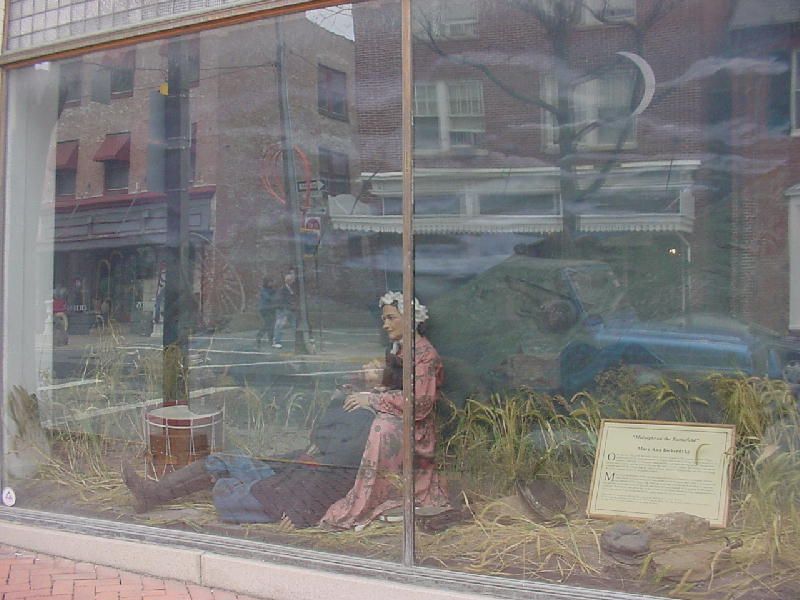
One of the big projects facing us is changing our front window display. It has had the same scene depicting Mary Ann “Mother” Bickerdyke tending to a wounded soldier on the battlefield for over 10 years. This scene was inspired by the illustration “Midnight on the Battle Field” by J.J. Cade which is captioned, “It was Mother Bickerdyke, with a lantern still groping among the dead. Stooping down and turning their cold faces towards her, she scrutinized them searchingly, uneasy lest some might be left to die uncared for. She could not rest while she thought any were overlooked who were yet living.”


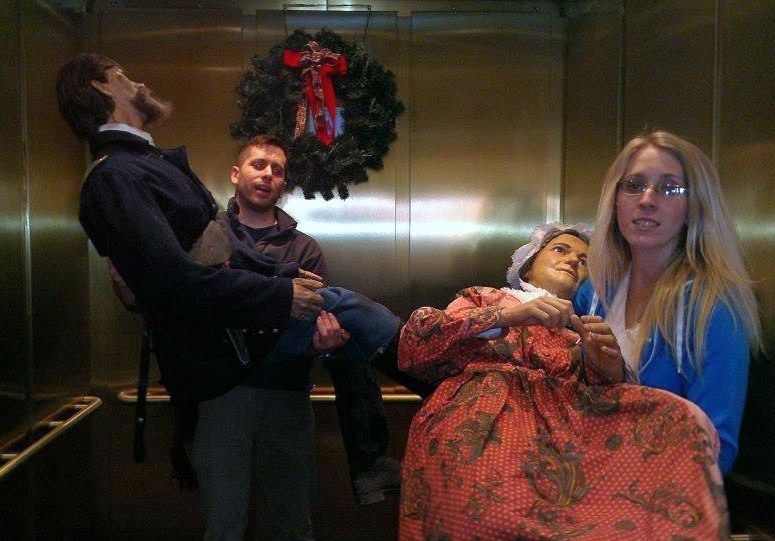
Before we can construct a new display, the old one has to be taken out. I wonder if Tom or Katie ever thought that carrying mannequins would be part of their job descriptions?


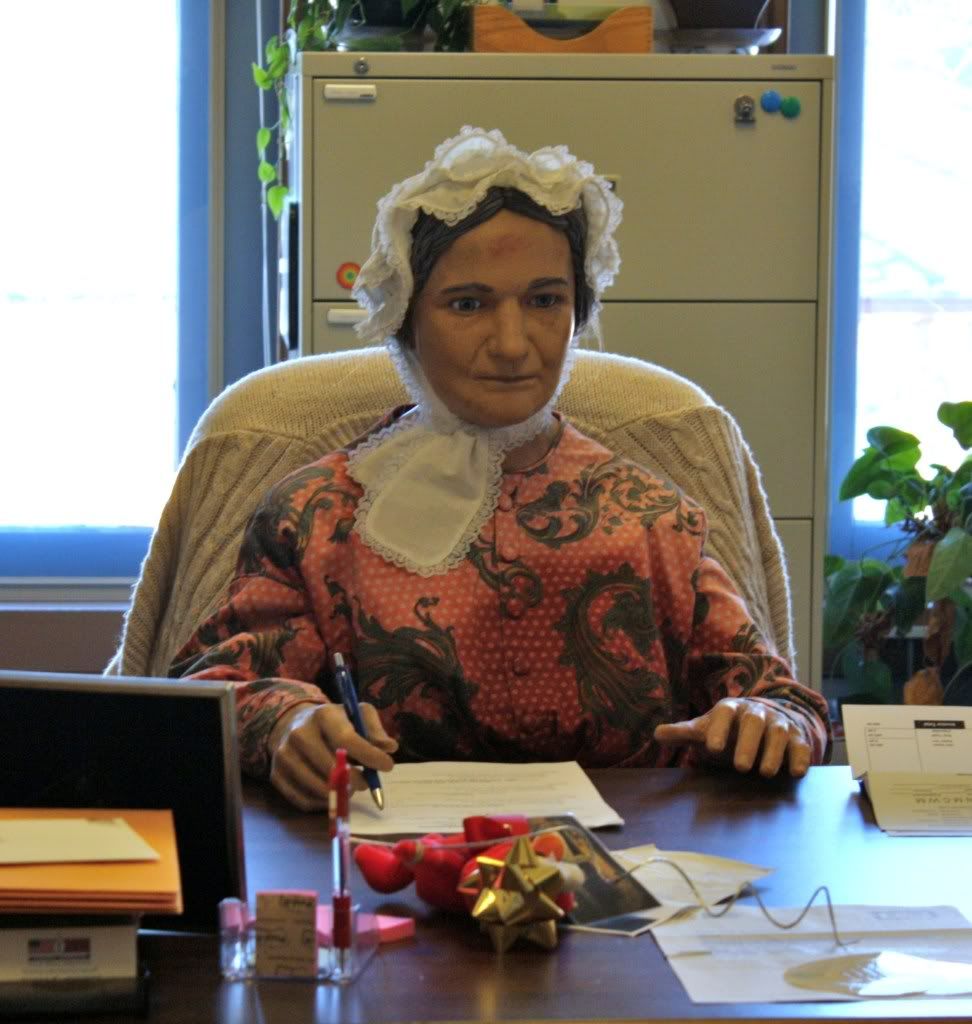
There’s always time to have a little fun on the job - I just hope I don’t see my next paycheck signed by Mother Bickerdyke!


     As with most big projects, there was an unwelcome surprise though.  When the mannequins were inspected more closely, it was discovered that there were insects and insect damage on the clothes.  It was a full “Red Alert” moment for me!  The clothes were immediately taken off and sealed in plastic bags, samples of the insects were sealed in smaller plastic bags, the mannequins were thoroughly vacuumed, and the exterminator was called.  Fortunately, the insects were contained to the display window; no evidence of them was found in any of the galleries or the collection room.


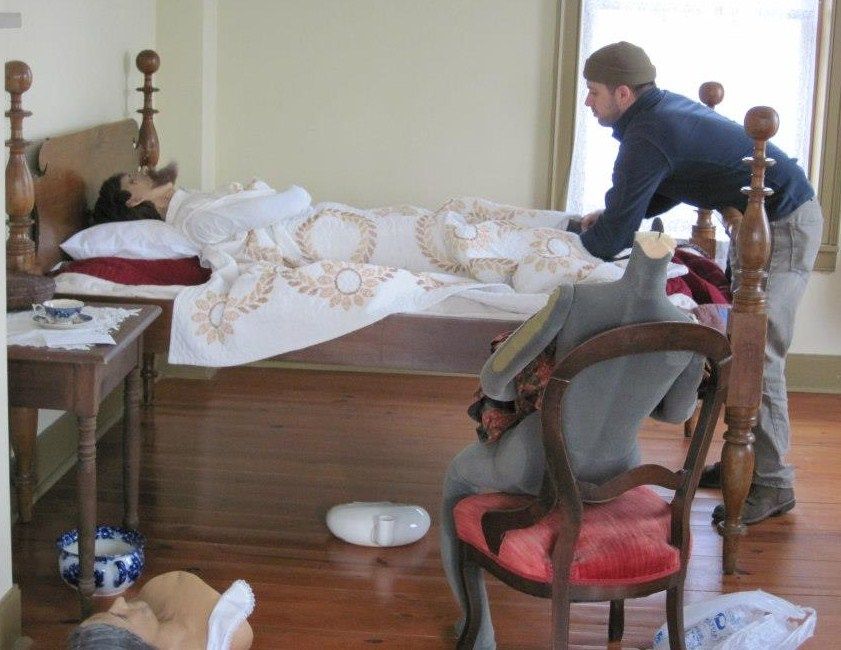
Once the mannequins had been treated, they were re-dressed and used out at the Pry House. Mother Bickerdyke is now Mrs. Richardson, and the wounded soldier has gotten a promotion to become a wounded General Richardson.
  

     We’re still working on the new front window display.  You’ll have to check back for reports on our progress!

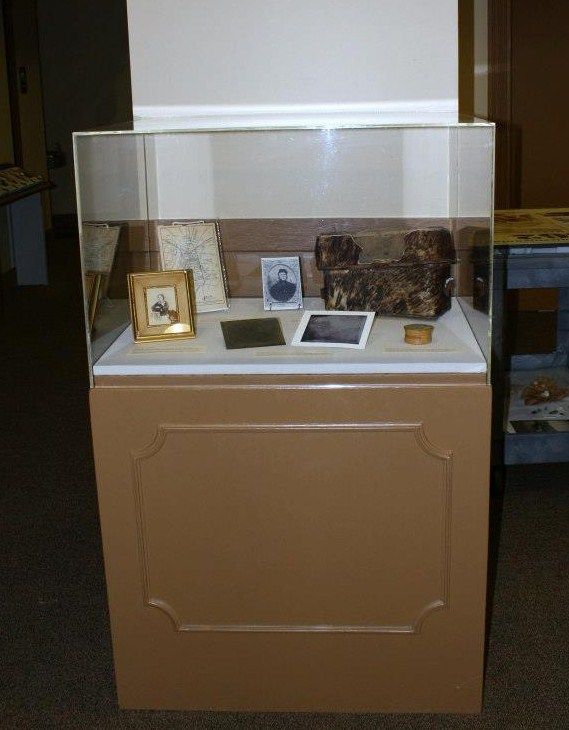
     My biggest project was the installation of two new displays.  You can see the new Clara Barton exhibit in last week’s post.  I also switched our Civil War Sesquicentennial display in the front lobby from the Battle of Antietam to the Battle of Gettysburg.


The new Gettysburg display contains a glass plate negative and photograph of a wounded color bearer, a medical case identified to a hospital steward, a tooth powder container, a portrait of a nurse, and a map of Gettysburg which shows the field hospitals.


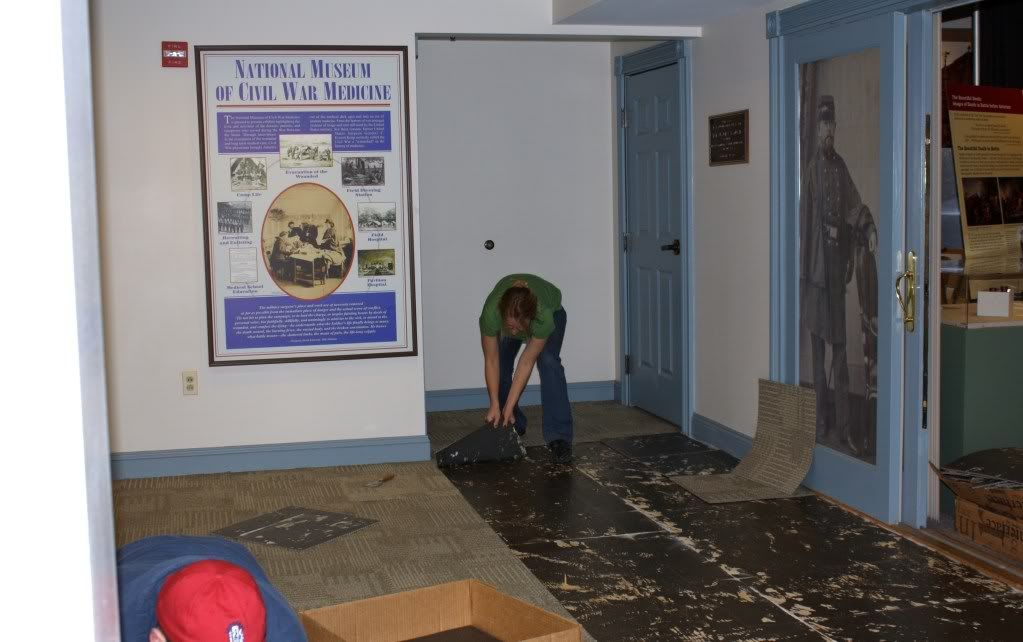
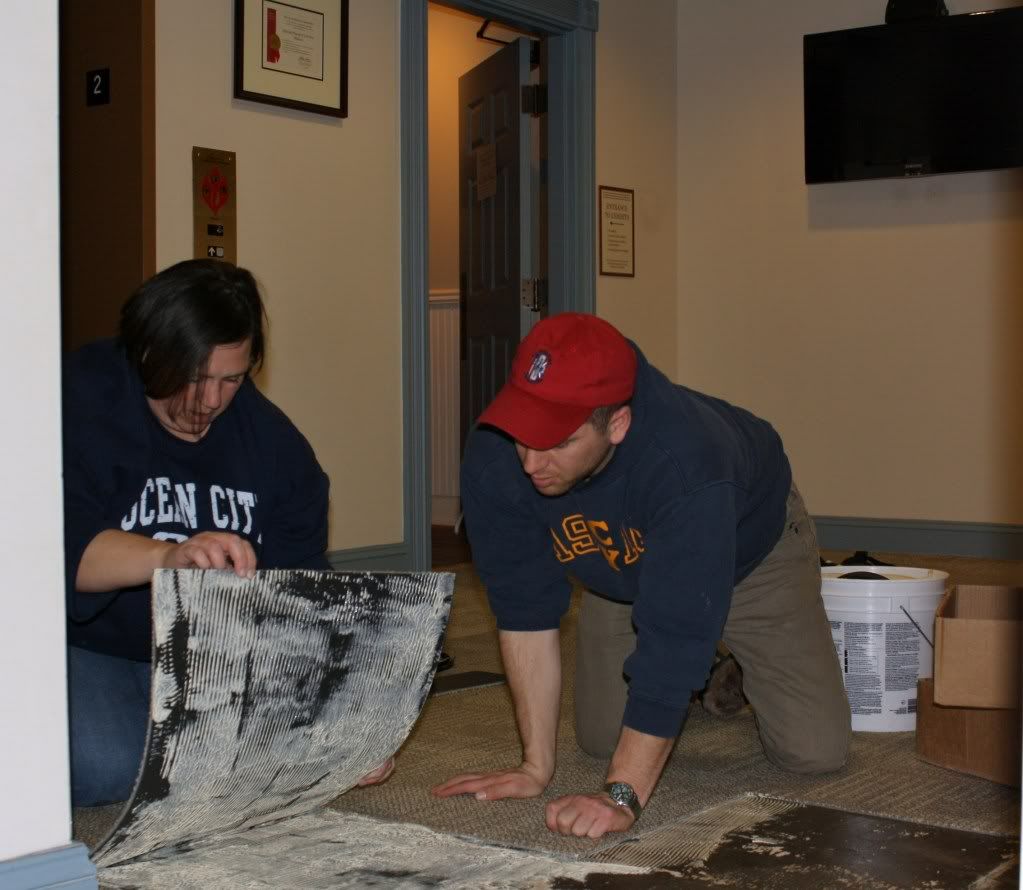
     Another museum project was to replace the carpet in our second floor lobby.  As you can see in the following photos, it was not a fun job!
 

Katie pulled out the old carpet squares.
 

April and Tom installed the new squares.


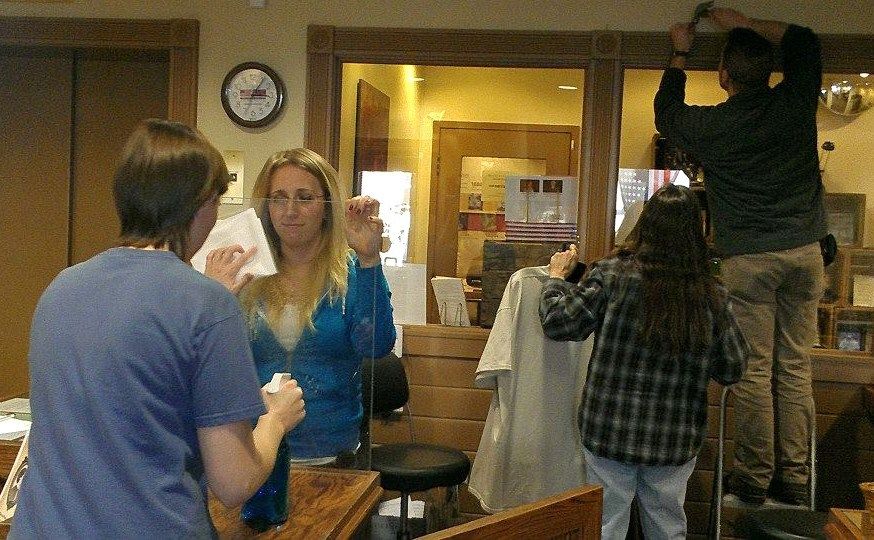
     There were plenty of other “dirty jobs” too.


Karen collected all the recycling.
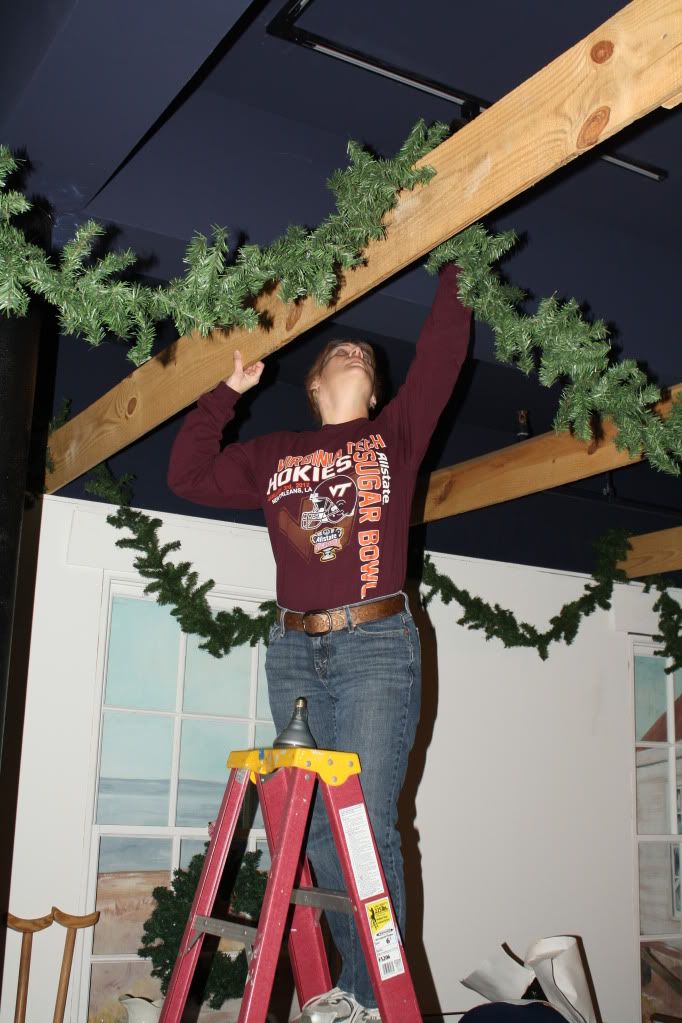


The museum store needed to be cleaned and reorganized.


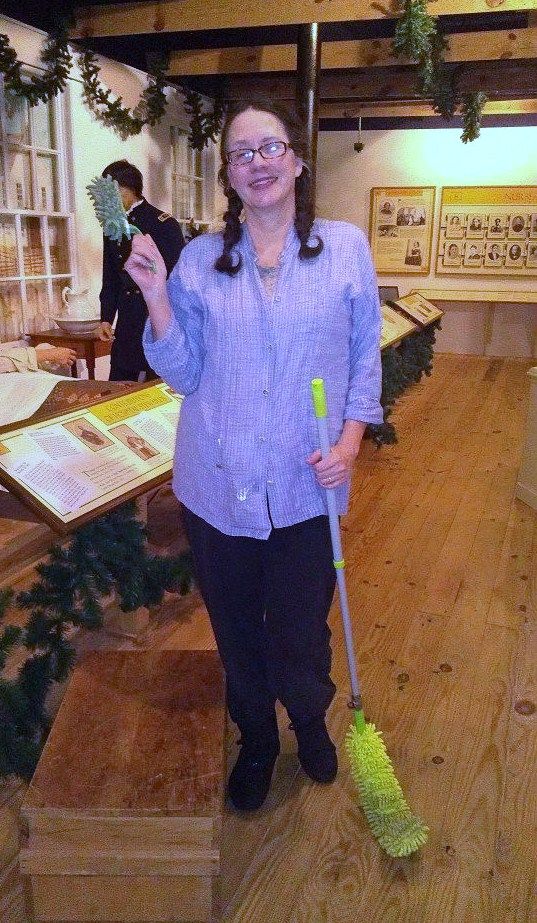
Adele tackled the job of dusting the galleries.


Kyle mopped the stairwell.


Audrey cleaned the carpet in our conference room.


And of course, there are always light bulbs that need to be replaced!
 

     It takes a lot of hard work on the part of the museum staff and volunteers, but the results are worth it.  The museum is ready to handle another year of visitors! 
    

 Photos courtesy of the National Museum of Civil War Medicine.